Artistic interventions

as part of BLOOM

As part of the annual theme BLOOM, and with Kunsthaus Graz as the starting point, individual exhibitions and projects are linked through artistic interventions. These interventions explore contemporary issues across the various collections and venues.

Project lead and curator: Katrin Bucher Trantow 

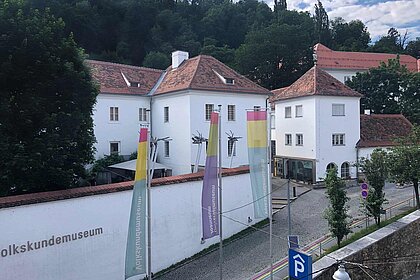
As part of BLOOM 2026, Volkskundemuseum am Paulustor

Regula Dettwiler

Unvergesslich

Image Credits

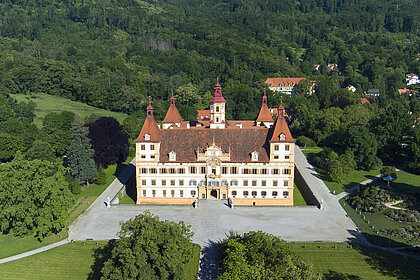
As part of BLOOM 2026, Schloss Eggenberg

Thomas Stimm

KNOSPE, 2025

2026

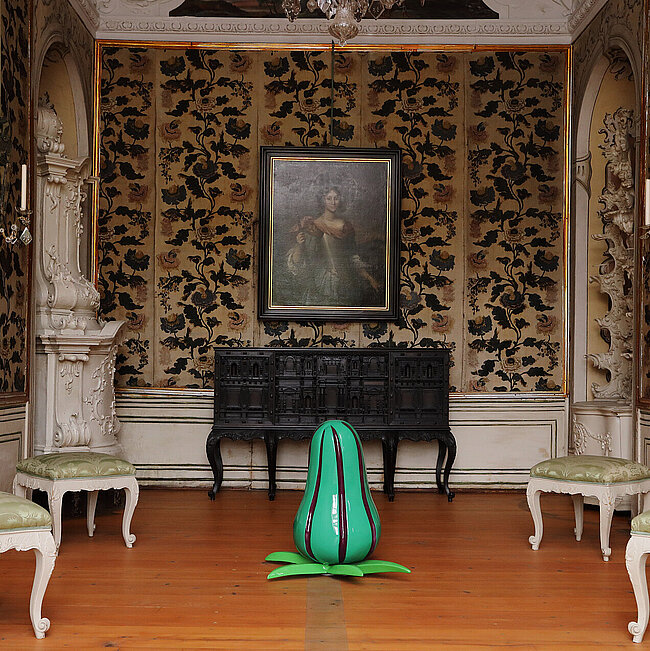
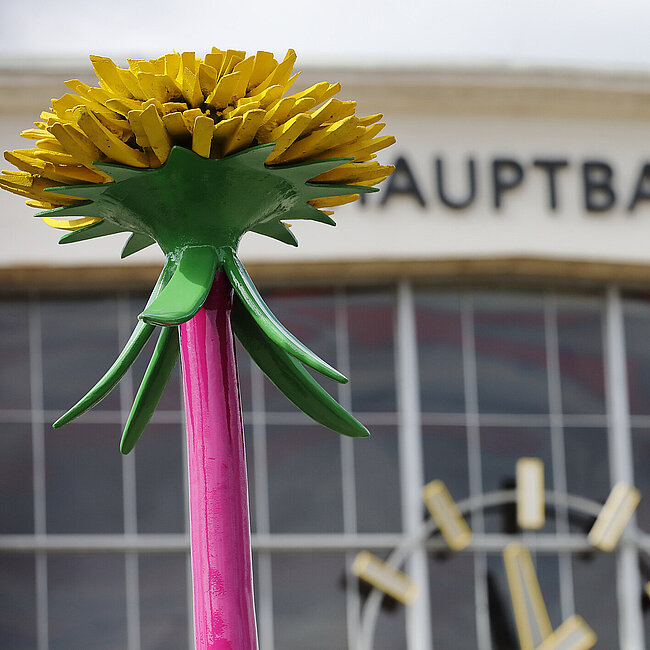
In the state rooms of Schloss Eggenberg, visitors encounter a monumental dandelion bud cast in green-painted bronze: Thomas Stimm transforms an inconspicuous natural motif into a poetic, humorous, and resistant sculpture through shifts in scale, clear form, and intense color. Inspired by comics and Pop Art, he introduces nature as a deliberate contrast to representative and urban spaces.

You can also find out more about his work at Graz’s station forecourt and at the Kunsthaus Graz

Image Credits

As part of BLOOM 2026, Graz’s station forecourt

Thomas Stimm

Löwenzahn, 2026

2026

As part of the BLOOM project, an oversized dandelion produced together with Institut for Art in Public Space and Galerie Reinisch can also be seen at Graz’s station forecourt. Stimm’s works confront architecture with lively, defiant forms of nature, making the ordinary appear monumental — so that, as Stimm puts it, “we do not pass paradise by too quickly.”

You can also find out more about his work at the Kunsthaus Graz and at Schloss Eggenberg. 

Image Credits

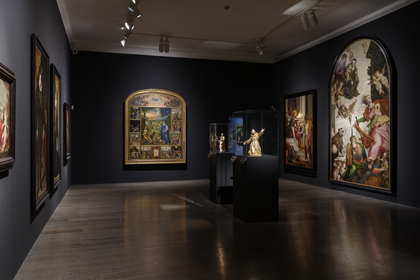
As part of BLOOM 2026, Alte Galerie

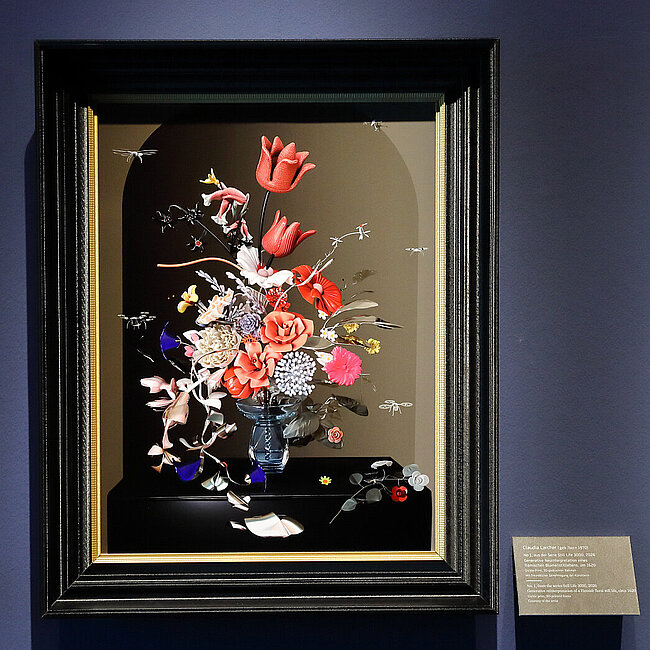
Claudia Larcher

No. 2, aus der Serie Still Life 3000, 2026

Generative Neuinterpretation eines flämischen Blumenstilllebens, um 1620.
Original: Alte Galerie, Schloss Eggenberg/UMJ
Giclée-Print, 3D-gedruckter Rahmen

2026 

The permanent exhibition features an installation by the artist Claudia Larcher.

Image Credits

As part of BLOOM 2026, Coin Cabinet

Ryts Monet

Works

22.05.–31.10.2026

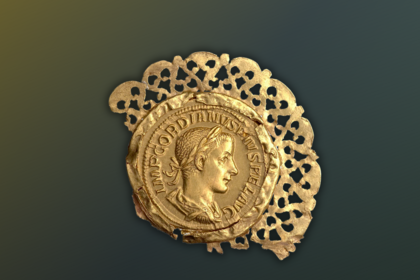
For the Coin Cabinet and the exhibition The Blooming Language of Money, Ryts Monet has integrated works that relate nature, systems of value, and image production into a shared network of relationships, expanding the context of the numismatic collection.

Riserva Aurea (Orchids), Assembled banknotes, paper, glass, 50 x 70 cm, 2026
Kunst = Kapital², colored ballpoint pen on paper, 70 × 50 cm, 2026
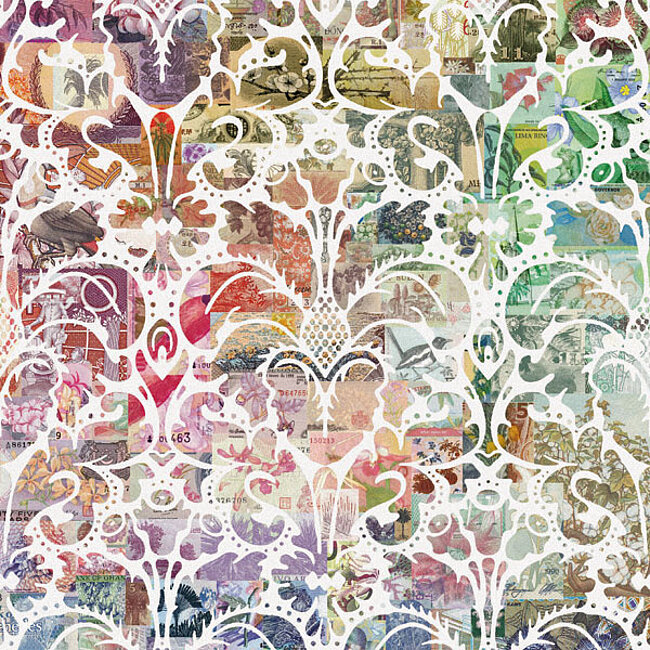
In God We Trust, digital collage printed on wallpaper, various dimensions, 2015
Frottages (series), colored crayons on paper, 21 × 29,7 cm per element, 2026

Ryts Monets Riserva Aurea (Orchids) (2026), the artist assembles international banknotes into a field of orchid images, referencing Singapore’s “Orchid Series”, in which the national currency was deliberately designed without human figures. The orchid appears here as a hybrid form and a symbol of cultural plurality, as well as a model of controlled coexistence.

In In God We Trust (2015), the US dollar motto becomes the starting point for a large-scale wallpaper composed of fragments of banknotes, whose floral motifs represent national plant symbols and map global systems of value.

The series Kunst = Kapital² (2026) transfers Marx’s value logic (M–C–M’) onto artworks depicted on banknotes and meticulously reconstructs them in ballpoint pen, revealing a closed circuit between money, image, and artistic production.

In the Frottages (2026), coins from the Coin Cabinet are reorganised into botanical categories and made visible through rubbing techniques, creating unexpected visual harmonies across geographically and historically separated systems.

Finally, in Fleur de Sal (2026), salt crystallisations are applied to floral coin motifs, linking salt as an ancient means of payment with natural processes of crystallisation. Together, the works form a systemic reflection on value, nature, and representation, in which money, plant, and image continuously transform into one another.

 

Image Credits

As part of BLOOM 2026, Neue Galerie Graz

Suzanne Anker

Series 'Vanitas (in a Petri Dish)'

24.04.04.10.2026

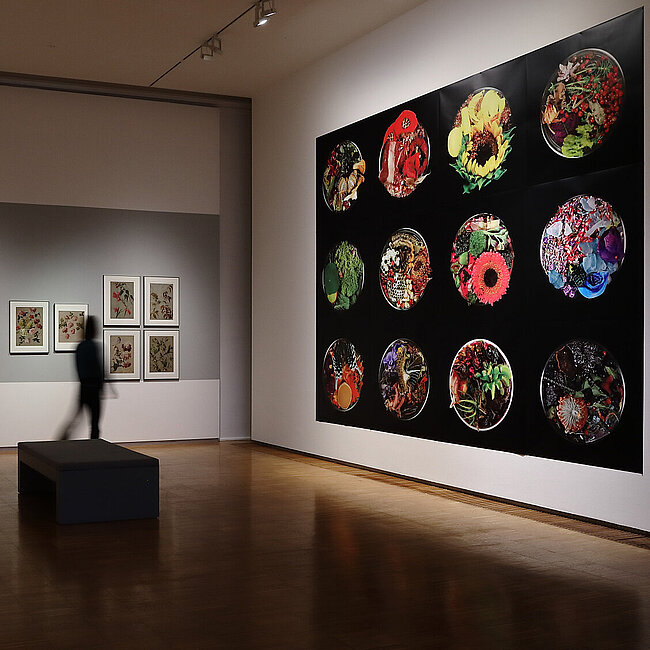
For the exhibition Analytical Beauty at Neue Galerie Graz, American artist Suzanne Anker presents a multi-part photo series as a striking speculation on the future. In Petri dishes, Anker creates highly detailed arrangements bringing together endangered plants, insects, and fruits.

Vanitas (in a Petri Dish) is a photographic series composed of arranged still-life elements. Translating the Dutch vanitas tradition into photography, Anker uses the Petri dish as a symbol of what is yet to emerge, particularly in the field of synthetic biology.

A pioneer of bio art, Anker reflects on both the persistence and inevitable decay of living forms. Echoing historical vanitas paintings that warned against material excess, the works invite viewers to reflect on the fragility of life, ecological transformation, and human mortality.

Image Credits

As part of BLOOM 2026, Naturkundemuseum

PSX Consultancy

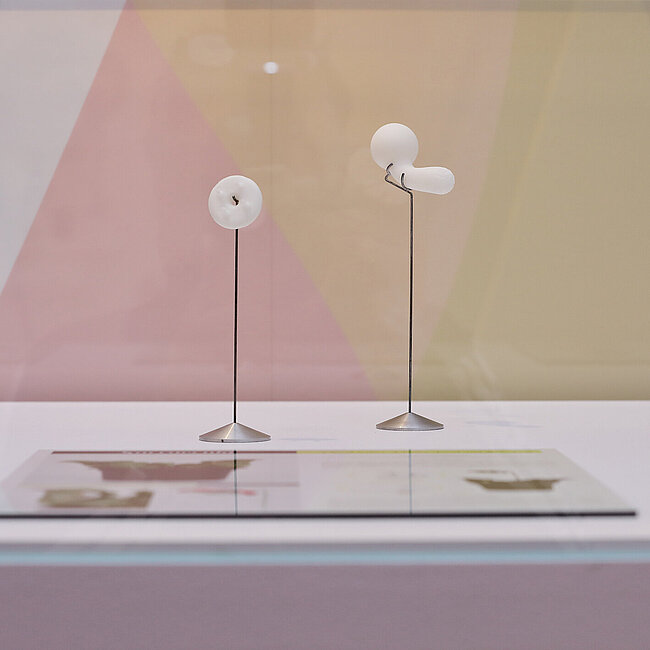
Tools for supporting plant reproduction

Or more directly: sex toys for plants

24.04.202612.09.2027

Behind the irony lies a serious question: how is the relationship between humans and non-humans changing? The interdisciplinary team from art, design and science creates objects that challenge our anthropocentric perspective — scientifically grounded, playfully communicated, inherently absurd. By exploring parallels between human and plant reproduction, the project opens a discourse on ethics and post-anthropocentrism.

A project by Pei-Ying Lin (TW), Špela Petrič (SI), Dimitrios Stamatis (GR) and Jasmina Weiss (SI).

Image Credits

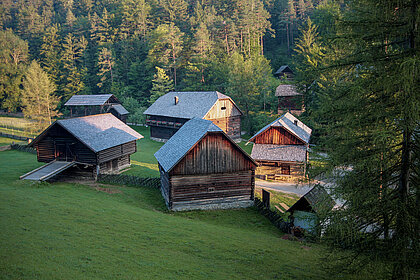
As part of BLOOM 2026, Austrian Open-Air Museum Stübing

Nina Schuiki

Helena`s Tears

05.2025–10.2026

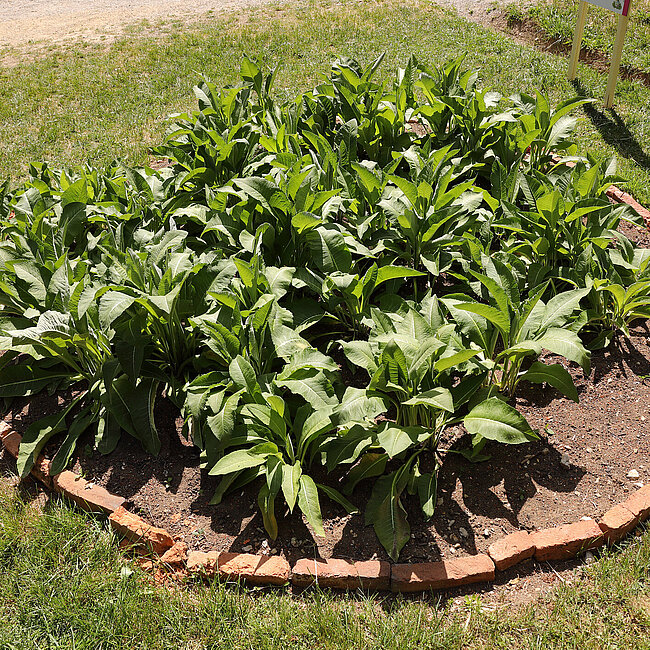
For the exhibition Blooming Medicine at the Austrian Open-Air Museum Stübing, Nina Schuiki creates a narrative garden bed dedicated to elecampane, a historic medicinal plant. In a second step, she links the long process of caring for the plants with the healing scents of the herb, which circulate through the ventilation system of the Kunsthaus Graz.

In her evolving work Helena’s Tears, Nina Schuiki focuses on elecampane, a medicinal plant known since antiquity. Together with the museum gardeners, she creates a tear-shaped planting bed referring to the myth that the plant grew where Helena’s tears fell to the ground. Schuiki intertwines nature, mythology, and healing knowledge, highlighting time as an essential part of the relationship between humans and the environment.

At the Austrian Open-Air Museum Stübing, alongside BLOOM, there is also a bed of elecampane created by the artist Nina Schuiki.

Image Credits

As part of BLOOM 2026, Agriculture Museum Schloss Stainz

Anita Fuchs

Standortbouquets, 2025

09.05.31.10.2026

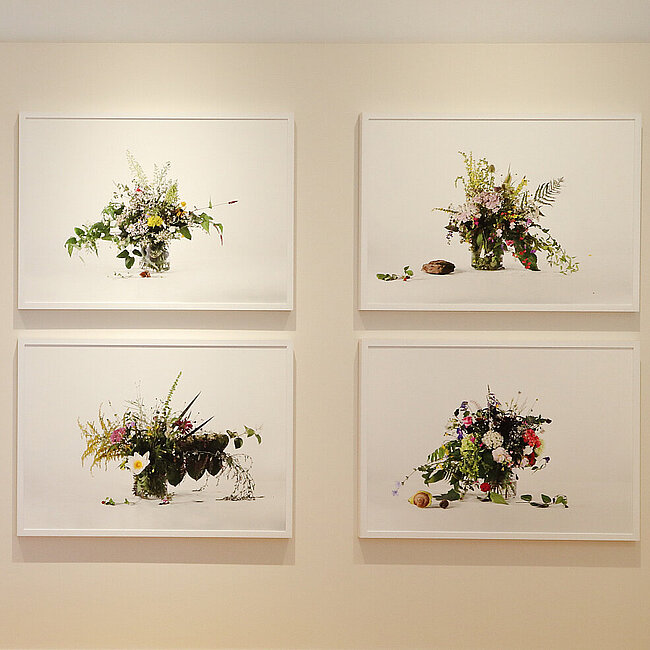
For the exhibition Blooming Fields, Anita Fuchs presents Site Portraits, an eight-part series of all BLOOM locations as a postcolonial reflection on Dutch still life painting. Flower bouquets collected within the vicinity of each site are composed into individual portraits of a place and its native as well as non-native flowering species.

For the exhibition Blooming Fields: A Journey into the Blue at Schloss Stainz, Anita Fuchs developed the series Site Bouquets (2025). Inspired by botanical research, conceptual art, the tradition of still life, and the 1843 medical and botanical conference under Archduke Johann, she explores biodiversity as a dynamic network of visible and invisible relationships. At eight BLOOM locations, she collected flowering plants within a 100-meter radius and arranged them into photographic still lifes.

Each work is additionally botanically analysed and documented. Fuchs thus combines artistic observation with scientific research, making ecological interconnections, symbioses, and the political dimensions of plants visible. The works reflect questions of origin, transformation, and the fragile balance between nature and human impact.

Image Credits

As part of BLOOM 2026, Schloss Trautenfels

Winfried Ritsch and Ingolf Christian

Power Flower Bells

01.05.31.10.2026

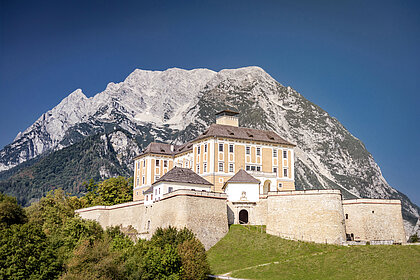
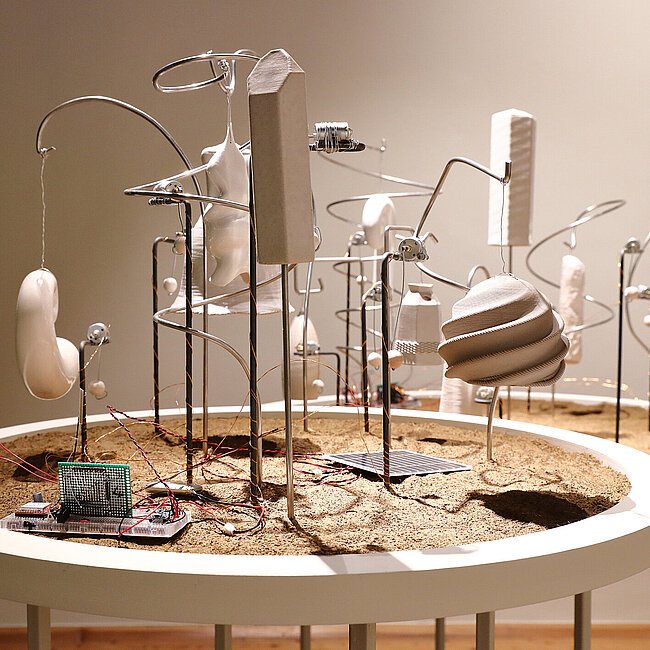
Power Flower Bells (Schloss Trautenfels) is a contemporary sound installation made of networked robotic flowers. Using LoRa radio (868 MHz), they exchange signals that travel like “bees” from flower to flower, transforming and generating new sonic impulses. Depending on energy levels, weather conditions and visitors, non-repetitive sound patterns emerge. The solar-powered ceramic objects respond sensitively to light: lively in sunshine, quiet and dreamlike in darkness. The result is a living sculpture of sound, electronics and time — a swarm as a “parallel world” in which machines act as social agents.

The project was developed in collaboration with the Ortweinschule Graz and the IEM.

Image Credits

As part of BLOOM 2026, Austrian Sculpture Park

Daniela Brasil

Up/Rooting

07.04.31.10.2026

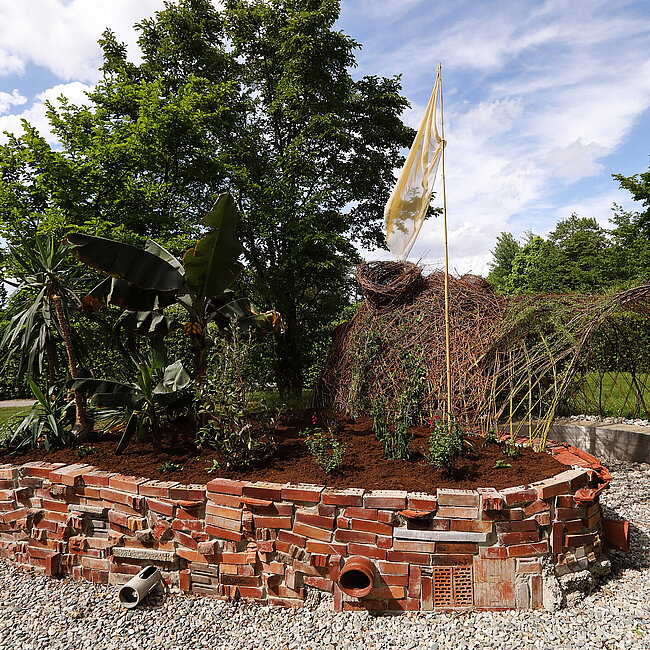
Up/Rooting reflects on this in the form of a healing garden, where visitors are invited to linger among migrant plants, feel their power, and learn from their adaptations. This garden is both meditation and artistic gesture—a regenerative space where sensual curiosity and the intertwined histories of Brazil and Austria converge.

She builds a sensual, political, and communal art-nature-life laboratory under a willow dome, focusing on the colonial journey of the Passiflora—the maracujá—from South America to Austria, where it is now winter-hardy and naturalized.

 Passiflora not only stands for the fruity sweetness of maracujá, but also has a calming effect as a medicinal plant.

Image Credits

As part of BLOOM 2026, Styrian State Library

Joiri Minaya

A Small Place (Botanical Garden Graz), 2026

Spandex fabrics, lounge chair, tables, and books

2026 

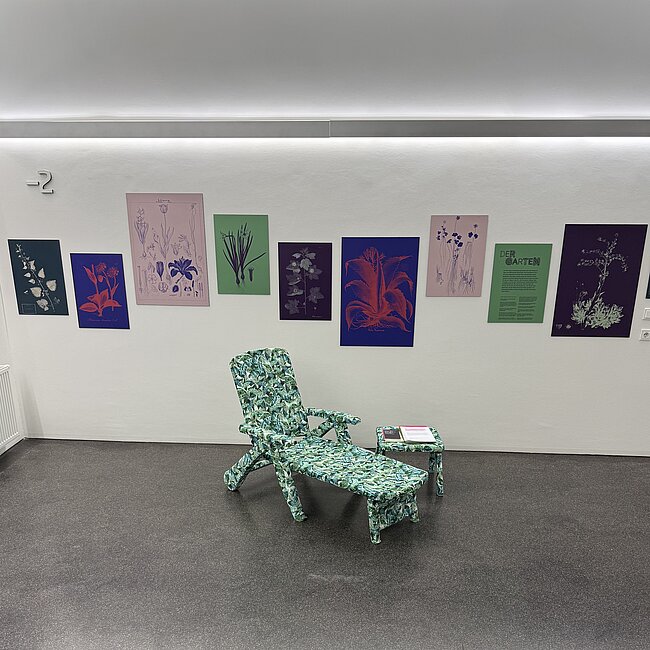
A reading installation reminiscent of a ship’s deck: Using printed spandex fabrics, a lounge chair, and a postcolonial reading list, artist Joiri Minaya creates an inviting space that evokes associations with tropical vacation destinations while critically reflecting on colonial imagery, tourism, and global trade histories.

Within the BLOOM collaborations, the work also establishes a connection to the history of the Botanical Garden, which, since the 19th century—in accordance with the wishes of the museum’s founder, Archduke Johann—has brought exotic plants to Graz and, like all botanical gardens of that era, helped shape early European longings for a “tropical” world. In Minaya’s work, tropical patterns appear as ambivalent symbols straddling the realms of exoticism, projection, and resistance.

A collaboration between Kunsthaus Graz and the Styrian State Library.

Image Credits