Alte Galerie

Masterpieces

Image Credits

Location

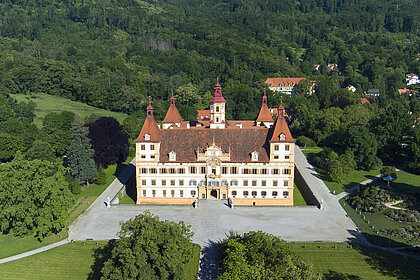
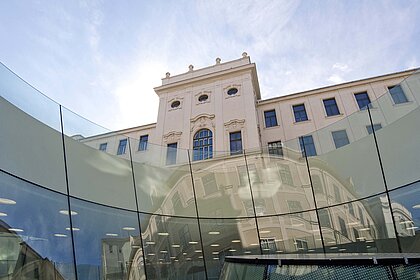
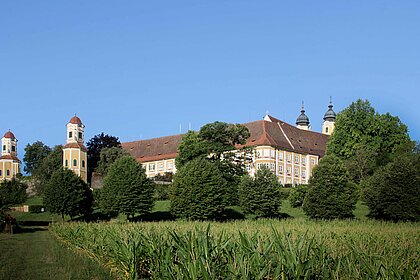
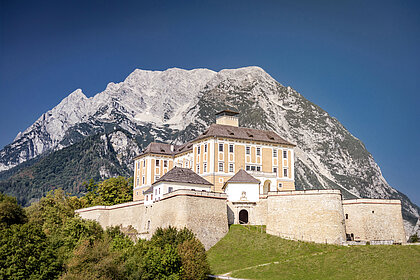
Alte Galerie, Schloss Eggenberg

Curators

Ulrich Becker, Barbara Kaiser, Karin Leitner-Ruhe and Christine Rabensteiner

Show all

About Alte Galerie

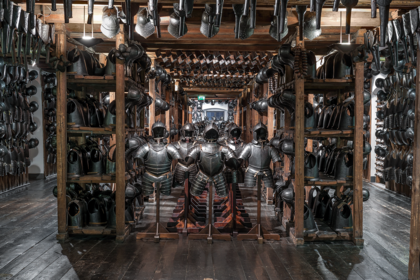
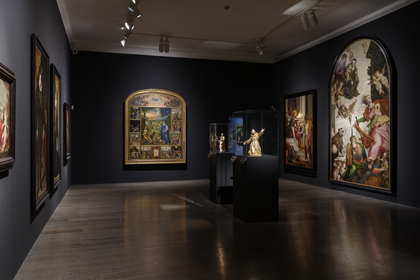
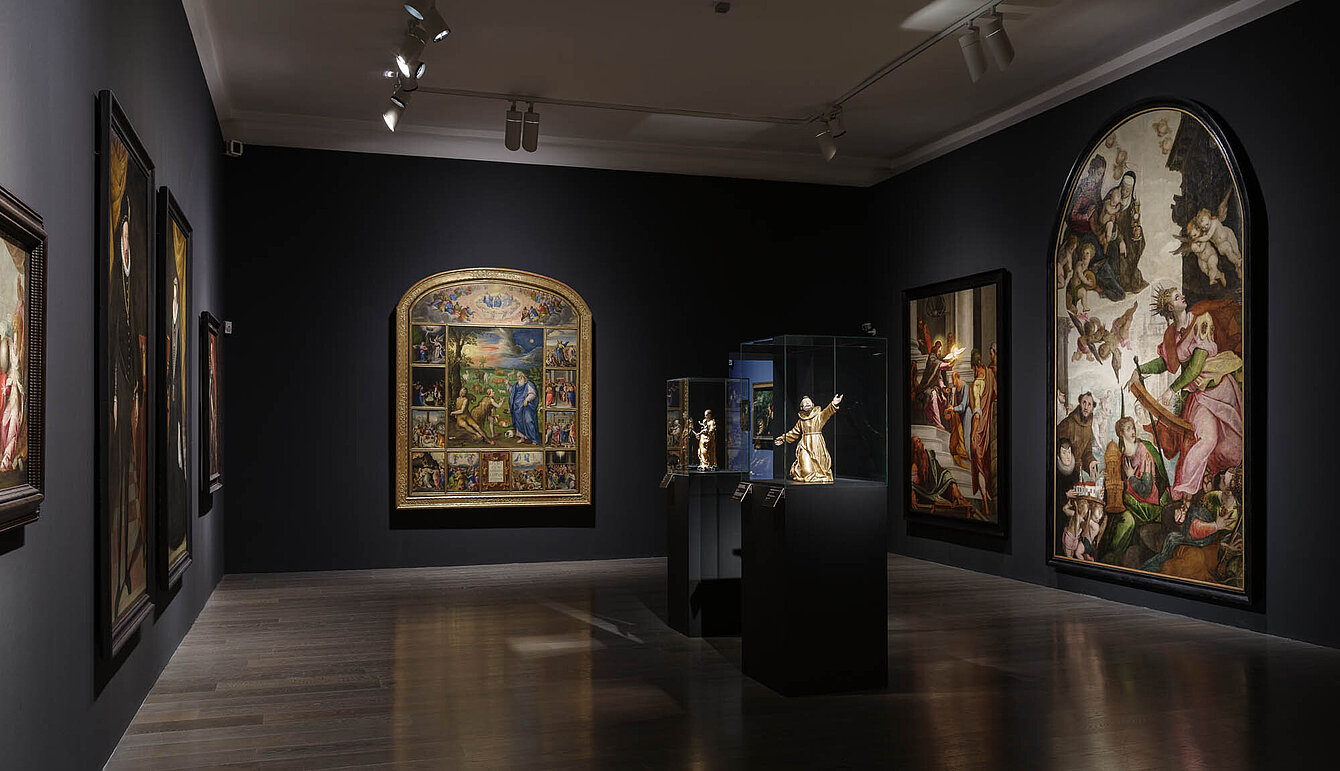
The Alte Galerie invites you to take a stroll through the history of European art from the Middle Ages to the end of the Baroque period. In its new display, the Alte Galerie reveals the splendour and misery of a fascinating epoch: the early modern period.

22 Theme Rooms

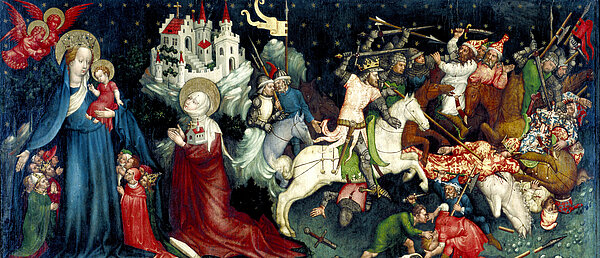
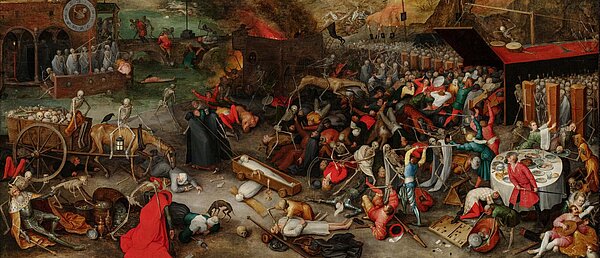
Referred to as the early modern period, the centuries between 1500 and 1800 mark the transition from the Christian world view of the Middle Ages to the Enlightenment on the eve of the Modern Age: as old certainties dwindled, the search for new ways towards the future was fraught with conflict. The epoch is often associated with Renaissance and Baroque splendour. Yet on closer inspection, this dazzling façade also reveals a blood-soaked litany of endless wars and bitter distress. As if guided by the unsteady hand of the goddess Fortuna, the dual countenance of this epoch is marked by religious struggle, by death and by the enjoyment of life, by hunger and abundance.

In this new presentation, the art treasures of the Alte Galerie – enriched by precious loans from the Kaiserschild Foundation – convey an overview of a fascinating age caught between splendour and misery. They enable us to recognize the ups and downs which have shaped our past and continue to resonate right up to the present day.

Overview of the permanent exhibition

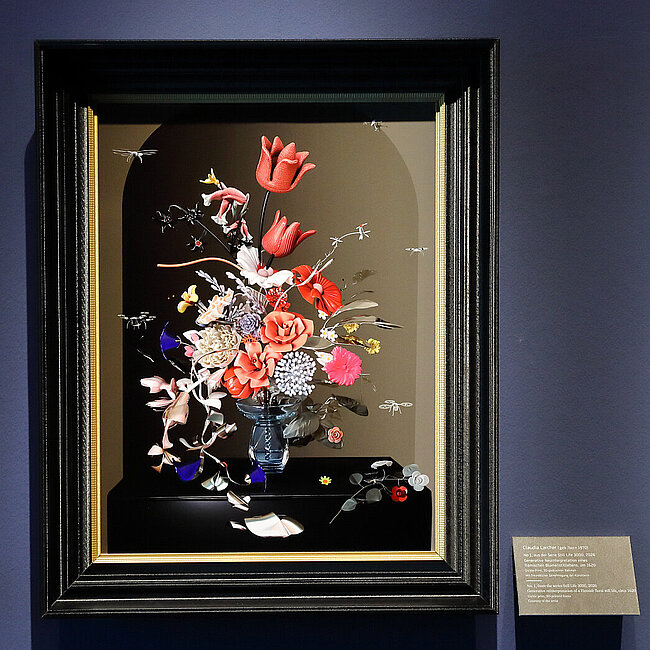
As part of BLOOM, an artistic intervention by Claudia Larcher is being presented in the permanent exhibition at the Alte Galerie.

As part of BLOOM 2026, Alte Galerie

Claudia Larcher

No. 2, aus der Serie Still Life 3000, 2026

Generative reinterpretation of a Flemish floral still life, circa 1620.
Original: Alte Galerie, Schloss Eggenberg/UMJ
Giclée-Print, 3D-printed frame

2026 

In her series Still Life 3000, Claudia Larcher brings digital, AI-generated flower arrangements into dialogue with the tradition of classical still life. Inspired by two Flemish ‘flower portraits’ from the early 17th century in the Alte Galerie collection, Larcher’s reinterpretations connect the past with the ecological, technological and socio-political challenges of the present. Traditional symbols of vanitas are revived in today’s context. Set pieces from our petroleum-based present, such as petals made of what appears to be plastic or a pollinator drone, refer on the one hand to modern technology and consumption and on the other to the loss of biodiversity and climate change. Is this what the floral still life of the future will look like?

The permanent exhibition features an installation by the artist Claudia Larcher.

Image Credits