
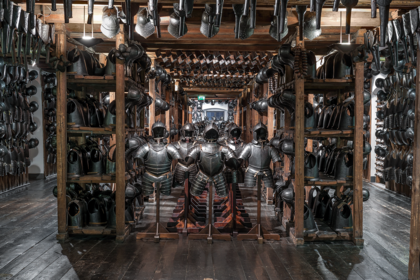
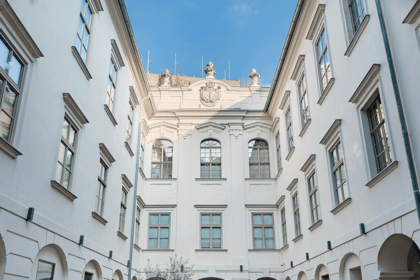
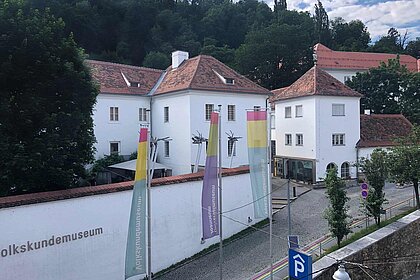
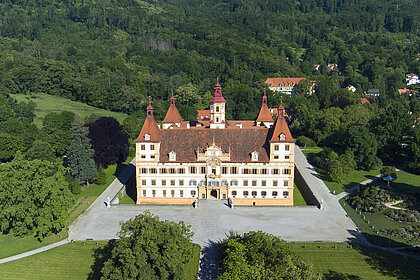
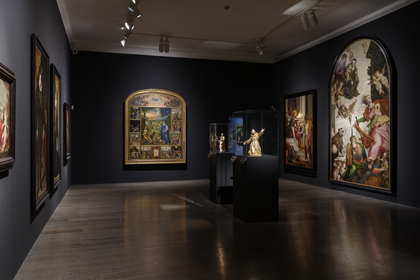
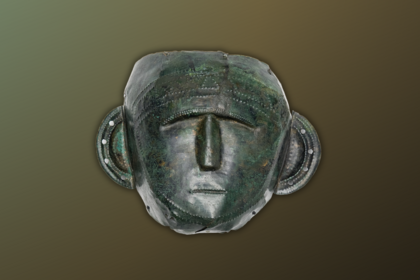
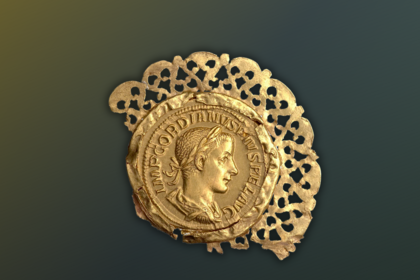
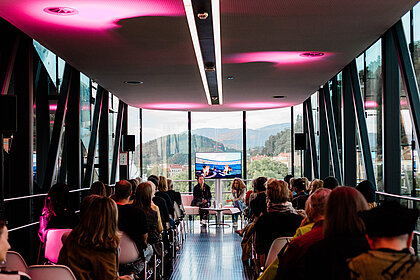

The four exhibitions in the 2021 programme spanned the past, the present and the future, offering a comprehensive overview of Styria’s diversity through contributions from the fields of art, history, nature, science, technology and research.


The four exhibitions in the 2021 programme spanned the past, the present and the future, offering a comprehensive overview of Styria’s diversity through contributions from the fields of art, history, nature, science, technology and research.
Image Credits
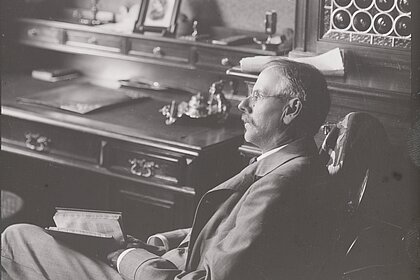
History Museum
Duration: 10.04.-31.10.2021
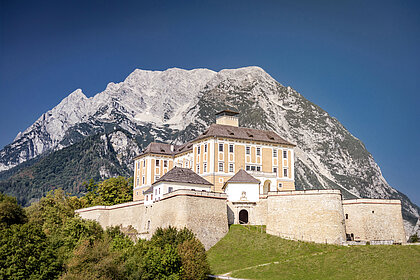
Folk Life Museum at Paulustor
Duration: 10.04. - 31.10.2021
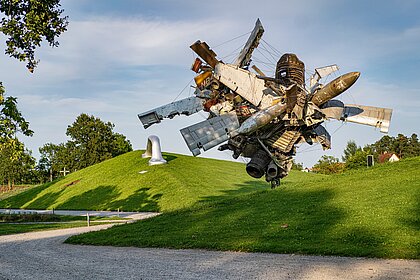
Kunsthaus Graz
Duration:10.04.-31.10.2021
Mobiler Pavillon
Wien: 08.-18.04.2021
Hartberg: 08.05.-04.06.2021
Spielberg: 05.-25. 06.2021 (24.-27.06. und 01.-04.07.2021 mit Formel-1-Ticket)
Schladming: 14.08.-05.09.2021
Bad Radkersburg: 25.09.-31.10.2021
Commissioner
Provincial Government of Styria
Sujets
Design: KADADESIGN
Show all
About SHOWING STYRIA
SHOWING STYRIA establishes a new format for the major ‘Regional Exhibition’. The intention is to incorporate the advantages of large-scale regional exhibition formats to date (provincial exhibitions, the ‘Regionalen’) and to expand them both in terms of contents and, vitally, geographical coverage.
As the vehicle of SHOWING STYRIA, the Universalmuseum Joanneum has integrated the History Museum, the Folk Life Museum, the Kunsthaus Graz and a mobile pavilion into the overall project.
It corresponds to the nature and tradition of the Joanneum as the province’s museum to engage with the history, art, culture and nature of Styria, and its society in all its variety and breadth.
The centre of the Joanneum has always been in Graz. Yet from the beginning it had a presence in various forms in Styria’s regions, too. Thus, in the days of Archduke Johann, it brought display exhibitions into the markets and towns, in order to better familiarise the population with the nature and culture of their province. The mobile pavilion adopts this approach again, in a forward-looking way.
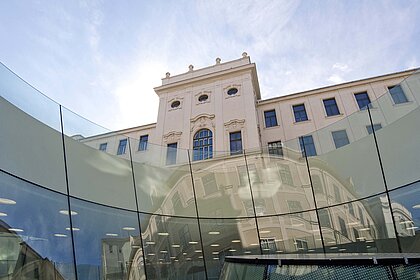
how it was. Space and History
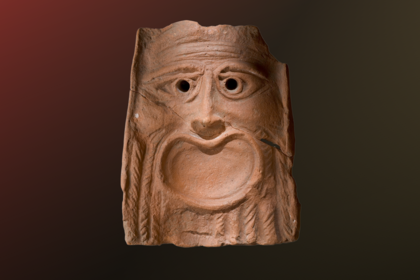
For the History Museum, it’s about the interaction between humans and nature: since time immemorial, natural conditions have determined the life of those persons settled here. These in turn have time and again endeavoured to mould nature to their own advantage.
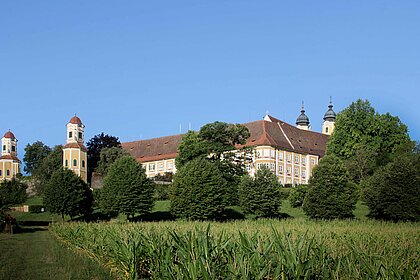
By looking at the medieval monasteries, Graz Castle or the industrial area around Donawitz, for example, we show that history takes place not only in time, but in space, too. History has centres and venues, intersections and intermediary spaces, motorways and slip roads. These form the building blocks of a landscape that can be explored by the public within the framework of our exhibition.
Mountains, forests and hilly landscapes, rivers and lakes create a perimeter for the historical landscape. Nature, technology and the languages spoken historically in Styria can be heard as the ‘background noise of history’.
Image Credits
how it is. Worlds Changes Perspectives
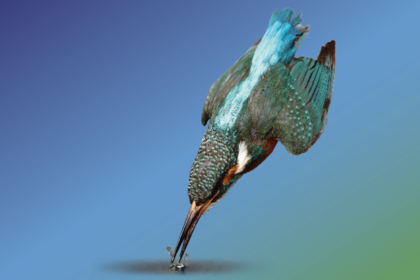
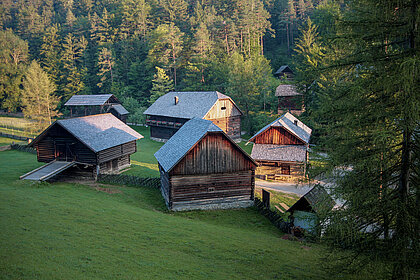
In its exhibition as part of SHOWING STYRIA, the Folk Life Museum investigates the present. The focus shifts to those living in Styria, those staying here or with some kind of connection to the province.
What concerns people? What do they identify with, what do they care about, how do they shape their lives, their environment and society?
Styria and Austria have for years counted among the regions and countries with the highest quality of life. At the same time, people’s lives have been perceptibly changed by different influences and scenarios in our province.
Image Credits
what will be. Towards a Plurality of Futures
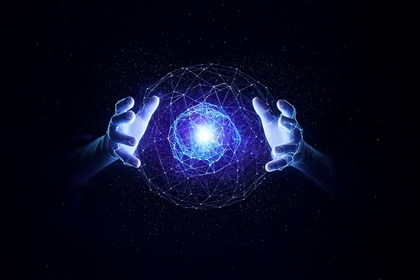
The Kunsthaus Graz, with its exhibition for SHOWING STYRIA, ventures to glimpse into the future of our province. The Future starts in the Present: whether it is about fair allocation of resources, social and spatial policies, mobility, identity and gender constructions, or about digital ethics.
The exhibition looks into various social areas of the present and attempts to find new, ground-breaking scenarios. In this, ‘future models of the past’ are also considered and woven into new visions and thoughts.
The exhibition in the Kunsthaus does not show a distant utopia, nor a possible design of an idealised society; rather, it offers a sketch of ‘what will be’. The use of the plural is deliberate, a glimpse of the futures.
Image Credits
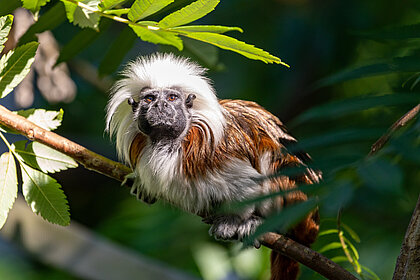
who we are. Art Diversity Landscape
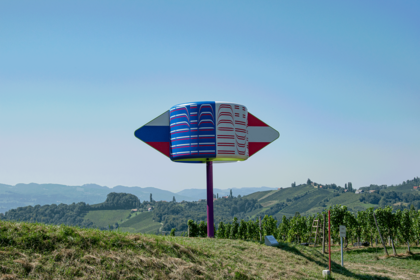
The mobile pavilion is the link connection SHOWING STYRIA to the regions. With its monumental video room installation, it engages with the variety of Styria through the medium of moving images.
The panorama display in the pavilion enables an exceptional overview of landscapes under analysis, as well as a spectacular presentation of Styria as a location chosen for art.
Styria is always described as a province of great variety. In this, reference is mostly made to the different landscapes in terms of nature and culture. But the special variety characterising Styria is also shown in its social diversity, in the rich art created and the variegated landscape of ideas.
The mobile pavilion of SHOWING STYRIA is a plea for art. The disassociation that sets in when looking through the lens of art allows one to break out of one’s established patterns of thoughts and ideas.
Image Credits