












Open Call: Research residency

BRIDGE: Building, Revising, Including – Diaspora and Gender Equality

Image Credits

About the call

AWARE (Paris), City of Women (Ljubljana), and Kunsthaus Graz, are launching an open call for three research residencies as part of BRIDGE: Building, Revising, Inclusion – Diaspora and Gender Equality, a two-year Creative Europe project (2026–2028). The theme centers women and non-binary artists in exile or with migratory or diasporic backgrounds in Europe.

Rooted in the feminist values that have guided the three organisations for decades, BRIDGE seeks to address the persistent underrepresentation of women and non-binary artists in exile and those with migratory or diasporic backgrounds within institutional narratives, archives, and exhibition histories. Drawing on critical revisions of the participating organisations’ archives, artists’ perspectives, and examples of inspiring practices from different countries, the residencies contribute to BRIDGE’s wider ambition to promote a richer understanding of Europe’s cultural history and the diverse experiences that continue to shape it today.


Researchers can apply for one of the residencies:

  •  3-month residency (AWARE, France)
  •  1-month residency (Kunsthaus Graz, Austria)
  •  1-month residency (City of Women, Slovenia)

Applications:

This call is intended for academics, art workers, and curators.

The applications should be submitted to the email address bridge@cityofwomen.org, stating the location and/or hosting organisation of the selected residency in the subject of the email.

The deadline for submission is 31 August 2026 at 23:59.


The application should include:

  • A research proposal of maximum 500 words in English 
  • A short letter of motivation (maximum one page, please specify for which residency you are applying)
  • A CV (1 page, with links to projects and publications)
  • A copy of the signed GDPR Consent Form


The selection will be done by a committee composed of the three organisations.

More on BRIDGE: https://mestozensk.org/en/bridge and https://awarewomenartists.com/en/reseaux/bridge/

Research residency with AWARE

Archives of Women Artists, Research and Exhibitions, a unit of the Centre Pompidou, in partnership with the Cité internationale des arts, Paris


AWARE: Archives of Women Artists, Research & Exhibitions works to make women and non-binary artists visible by producing and publishing free content on its trilingual website (French/English/Japanese). AWARE brings together a diversity of voices, with texts written by more than 500 researchers, curators, feminist art historians, art critics, and activists from around the world. This resource gathers content dedicated to women and non-binary artists in the fields of visual arts, design, and architecture, without limitations of medium or country. 

Hosted by the Cité internationale des arts in Paris, the AWARE research residency offers an opportunity to investigate the histories and trajectories of women and non-binary artists,  whose artistic practices have been influenced by experiences of diaspora, exile or migration. If desired, the selected resident will have access to the Cité internationale des arts’ archives and resources to develop original research on one or a number of the many artists who have passed through the institution throughout its history. The resident’s research will be presented at a Conference held at Kunsthaus in autumn 2027.


Conditions of the residency:

Length of the residency: 3 months (beginning of 2027)

Accomodation: The resident will be provided a studio by the Cité internationale des arts in Central Paris.

Financial conditions: Payment of a round-trip ticket between the place of residence and Paris, a living allowance of 1,000 €/month, i.e., 3,000 € for the entire residency

Support offered by AWARE: The AWARE team will provide its expertise and its institutional, artistic, and academic networks.

At the end of the residency, the resident will be expected to provide a research article, which will be published on the AWARE website. 

Research residency with Kunsthaus Graz

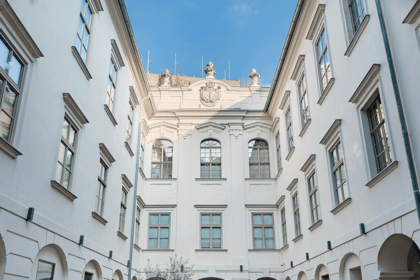
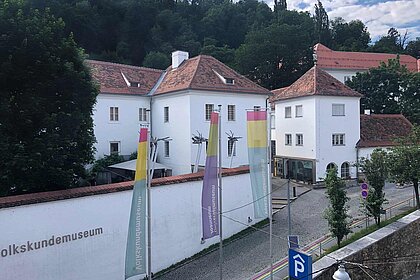
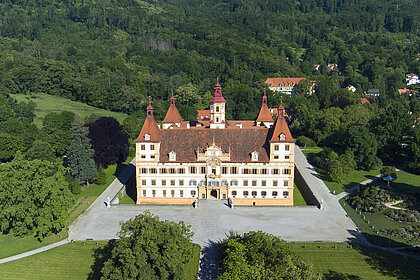
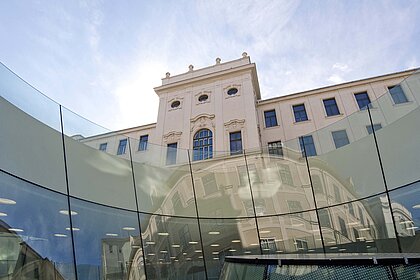
Situated in a historically charged border region and working for over 20 years with a manyfold of international artists, Kunsthaus Graz offers an open and unique opportunity to investigate the histories and trajectories of women and non-binary artists whose lives have been shaped by exile, migration, or displacement. The selected resident will have access to Kunsthaus Graz and Neue Galerie archives and other local archives and resources to develop original research on one or a number of the many artists who have passed through the institution throughout its history in contexts of exile, forced migration, or transnational mobility. The resident’s research will be presented at the Conference held at Kunsthaus in September 2027.


Conditions of the residency:

Length of the residency:  1 month (between January and June 2027, dates to be determined)

Accommodation: The resident will be provided with accommodation and workspace

Financial conditions: Payment of a round-trip ticket between the place of residence and Graz, a fee of 1.500 € and living allowance of 35 eur/day

Support offered by Kunsthaus Graz: Kunsthaus Graz will provide its expertise and its institutional, artistic, and academic networks.

At the end of the residency, the resident will be expected to provide a research article which will be published on the Kunsthaus website.

Research residency with City of Women

The City of Women is a pioneering organisation dedicated to advancing feminism and gender equality in the fields of arts and culture. It was established following the inaugural interdisciplinary feminist festival, City of Women, held in 1995. Today, alongside the annual festival, the organisation develops and presents a diverse year-round programme of artistic, activist, and theoretical projects by women* artists and cultural practitioners. Its activities have also expanded to include arts education, community building, advocacy, and initiatives that foster connections between art, culture, and other sectors.

The research residency offers an opportunity to explore the work of women and non-binary artists whose artistic practices have been shaped by experiences of diaspora, exile, and migration. Upon request, the selected resident will be granted access to the City of Women's archival materials, which document the work of numerous artists with migratory or diasporic backgrounds, particularly from the former Yugoslavia, as well as from a wide range of other cultural and geographical contexts.

The outcomes of the research will be published on the City of Women website. The selected researcher will also present their findings at a conference held at Kunsthaus in autumn 2027.

*The term woman and other words written in the feminine grammatical gender are used inclusively and address anyone who identifies with the female gender, as well as non-binary, trans-, a- and intergender people. 


Conditions of the residency:

Length of the residency: 1 month (between November and July 2027, exact dates to be determined)

Accommodation: The resident will be provided with accommodation and workspace

Financial conditions: Payment of a round-trip ticket between the place of residence and Ljubljana, a living allowance of 1,700 € / month

Support offered by City of Women: CoW will provide its expertise and its institutional, artistic, and academic networks.

At the end of the residency, the resident will be expected to provide a research article, which will be published on the City of Women website.

Selection criteria

A consortium selection committee will evaluate proposals based on:

  1. Artistic and/or research quality: Conceptual clarity, rigor and originality; critical engagement with gender, migration and diaspora 
  2. Relevance to BRIDGE objectives: Contribution to cultural diversity, inclusion and gender equality; clear link to diasporic women and gender-nonconforming artists (or those affected by exile or with migratory status), especially those affected by conflict or systemic exclusion 
  3. Intersectionality and inclusiveness: Attention to intersections of gender with race, ethnicity, class, sexuality, disability, age or religion; potential to amplify erased or marginalized voices 
  4. Contribution to capacity building and networking: Potential to strengthen skills, methods or infrastructures; openness to collaboration and long-term networking 
  5. Feasibility and format suitability: Match between proposed format and programme structure; realistic timeframe and technical needs 
  6. Ethical and responsible practice: Sensitivity in handling personal and community histories; 


To ensure transparency, equal treatment, and avoid conflict of interests, applications will be evaluated by a 6-member committee with two representatives of each partner. To ensure confidentiality and data protection only members of the committee and the BRIDGE project manager will have access to the applications. All data will be managed in line with the GDPR Policy adopted by all project partners.

Eligible entities and categories of persons

Recipients must be natural persons meeting the following profile:

  • Residents or nationals of Creative Europe countries (EU Member States and eligible non-EU countries [1]); 
  • Particular attention will be given to displaced persons and to underrepresented groups facing intersectional discrimination (e.g. race, ethnicity, religion, disability, class)


[1] Albania, Armenia, Austria, Belgium, Bosnia and Herzegovina, Bulgaria, Croatia, Cyprus, Czech Republic (Czechia), Denmark, Estonia, Finland, France, Georgia, Germany, Greece, Hungary, Iceland, Ireland, Italy, Kosovo, Latvia, Liechtenstein, Lithuania, Luxembourg, Malta, Moldova, Montenegro, Netherlands, North Macedonia, Norway, Poland, Portugal, Romania, Serbia, Slovakia, Slovenia, Spain, Sweden, Tunisia, and Ukraine. 


Funded by the European Union. Views and opinions expressed are however those of the author(s) only and do not necessarily reflect those of the European Union or the European Education and Culture Executive Agency (EACEA). Neither the European Union nor EACEA can be held responsible for them.

BRIDGE is committed to