


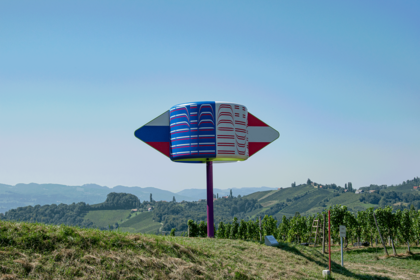






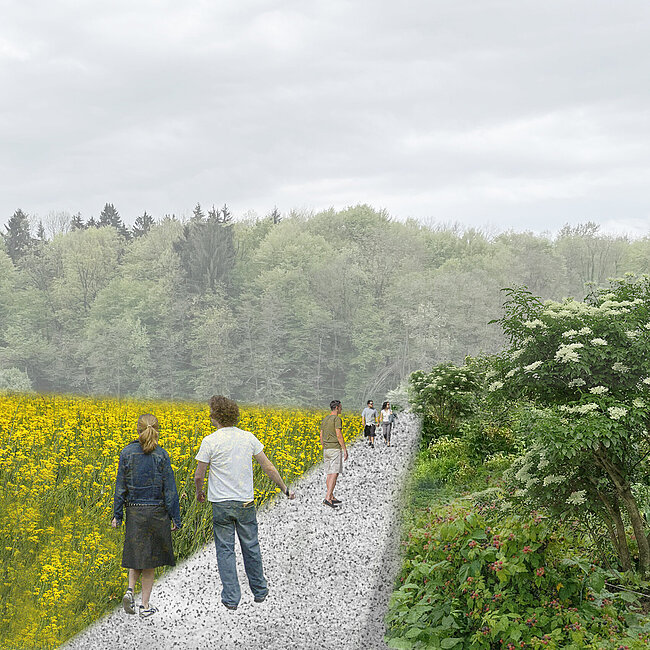
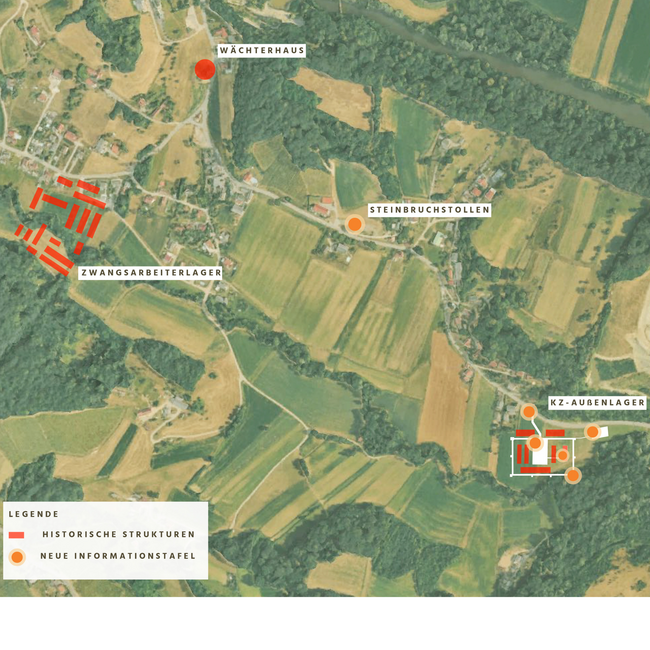
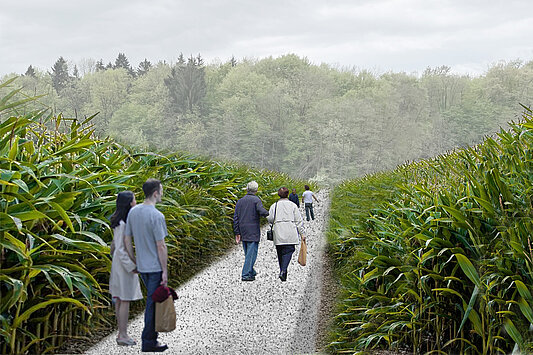
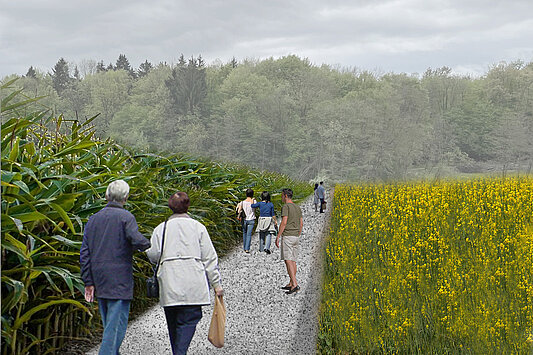
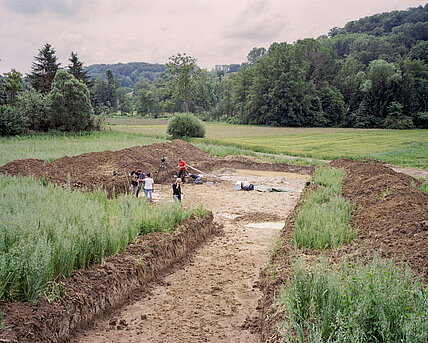
The Aflenz Memorial’s building site is a location on which the history of the former camp was concealed with maize fields for decades. This repressed past is brought back into view by the Aflenz Memorial as it creates a living space of remembrance. Paths running along the former camp boundaries allow visitors to experience the scale of the site, as there are no longer any visible remains of the buildings once located there. The former roll-call square and a barrack are also marked out on the site.
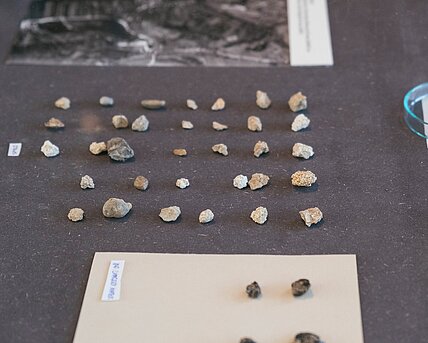
Alongside the network of paths, the second key element of the project is the planting scheme, which Milica Tomić is developing in collaboration with atelier le balto and the Graz-based studio boden. Archaeobotanical investigations have uncovered seeds from plants that grew on this site historically. A selection of these is now being sown once again as part of a multi-year crop rotation. The process will begin with a catch crop from August 2026: deep-rooted plants such as clover and other legumes loosen the soil, fix nitrogen, protect against erosion and sustainably improve soil structure. Sunflowers also contribute to the improvement of soil and form a layer of mulch over the winter, which decomposes and thus further enriches the soil with nutrients. From 2027 onwards, mustard, raspberries, blackberries, elderberries, kiwis, tobacco, maize and a few black elderberry plants will be planted. The black elderberry will remain permanently planted, as a reminder of the decades of suppression and concealment of the past. The seasonal plants, on the other hand, are replaced each year as part of a five-year crop rotation to ensure that the soil remains fertile and rich in nutrients.
The Aflenz Memorial regards the soil as an archive and an active participant, because it preserves traces of the past and contributes to the creation of a living memorial. It unearths seeds and hidden stories and allows them to grow into a landscape. Thus, the soil itself becomes a vessel of memory and reveals what has been inscribed within it. The site remains part of the present. One area continues to be used for agriculture. The produce is harvested and processed by the local council. Through the tending of the plants, the involvement of the local community and ongoing engagement, a place of learning, remembrance and reflection is created.



![[Translate to English:] Marktgemeinde Wagna](/fileadmin/_processed_/2/4/csm_w-dbd_80034ad21e.png "[Translate to English:] Marktgemeinde Wagna")
![[Translate to English:] Marktgemeinde Ehrenhausen](/fileadmin/_processed_/1/3/csm_Wappen_Ehrenhausen_5f52d86c4e.jpg "[Translate to English:] Marktgemeinde Wagna")