




Concentration camps such as Auschwitz or Mauthausen are famous memorial sites recalling the atrocities of the “Third Reich”. On the other hand, there is much less official commemoration of the countless crimes perpetrated within the network of forced labour camps and subcamps spread all across the Nazi-occupied regions of Europe during the Second World War.
One such camp, that was situated in Aflenz an der Sulm in southern Styria, is at the centre of an ongoing research project by artist Milica Tomić. From 1944 to 1945, prisoners from Mauthausen worked here alongside normal factory workers from Graz. They built warehouses and converted an underground quarry into a production site for Steyr-Daimler-Puch AG, the main Austrian arms manufacturer in the Second World War.
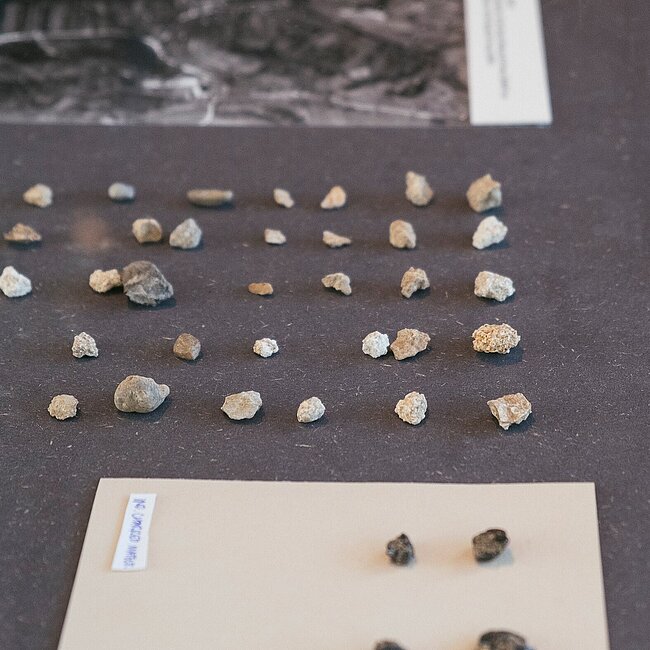
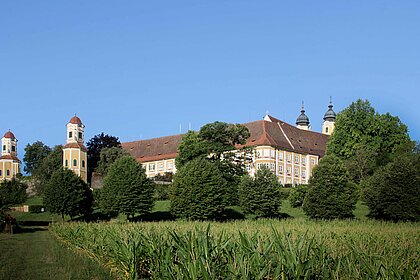
The camp barracks now covered by unremarkable cornfields have meanwhile vanished. Working in the vein of “reflexive” archaeology, Tomić tried to find a commemorative language for this (non-)place beyond the official aesthetic of monuments.
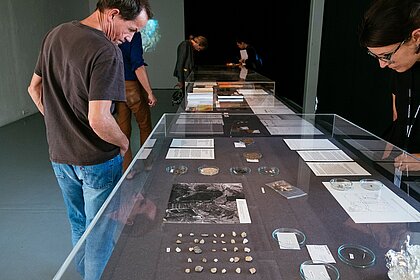
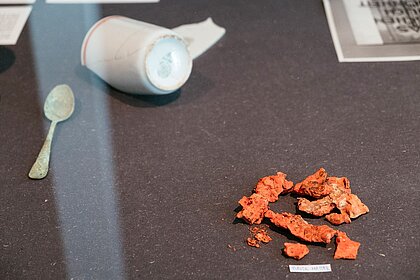
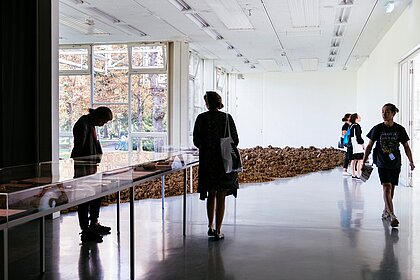
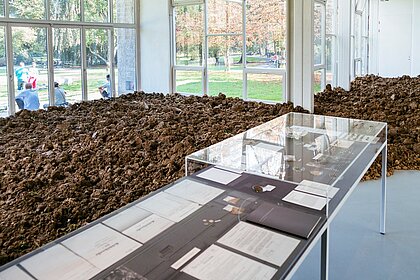
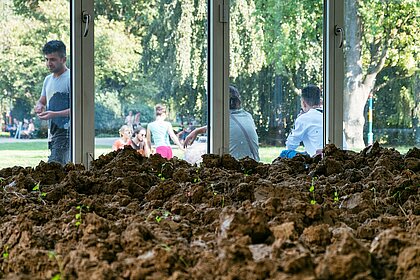
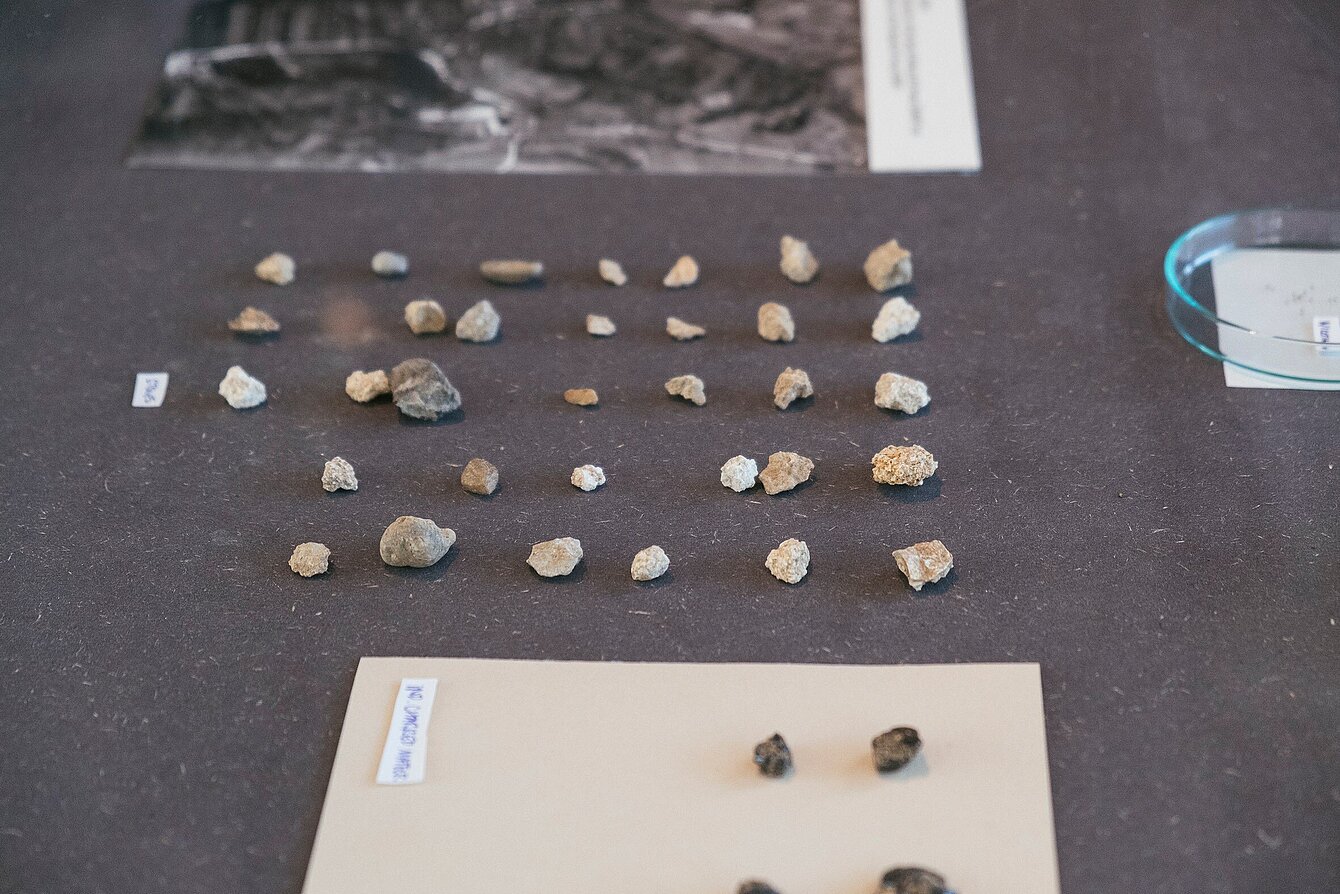
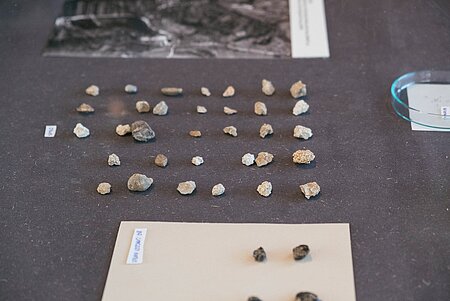
Her project developed especially for steirischer herbst was the first stage of a work in progress. Excavating soil from the site of the former forced labour camp, she transferred it into the exhibition space. Against the background of war, labour and capitalist production, this non-monument is confronted with the time-based nature of Tomić’s research into the dynamic relationship between the city of Graz and the subcamp located just beyond its limits.
- Milica Tomić, Philipp Sattler
With: Ana Bezić, Fehim Durakovic, Simon Oberhofer, Đurđa Obradović, Natasa Pavlović, Philipp Sattler, Bernhard Schrettle, Miloš Stojanović