



Marijan Matijević was an Austrian-Croatian artist. Born in Croatia, he studied in Zagreb under the renowned sculptor Ivan Meštrović. In 1942, he moved to Vienna and later relocated to Burgenland, where he lived until his death in 1971. In the immediate post-war period, he created a total of three monuments commemorating the partisan resistance in Carinthia/Koroška in the style of Socialist Realism. They bear witness to the anti-fascist consensus of the early Second Republic. One of them now stands at the Peršmanhof near Bad Eisenkappel/Železna Kapla, while another is located in Zell/Sele.
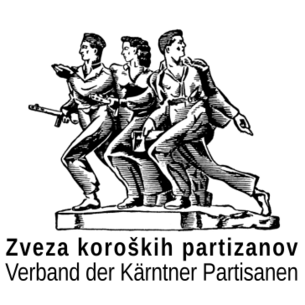
Matijević’s best-known monument was originally created in 1947 for a partisan grave in the cemetery of Völkermarkt/Velikovec. The bronze group depicts three life-size, armed partisans striding resolutely forward. In 1953, unknown perpetrators blew up the monument. The Republic of Austria did not have the destroyed figures restored; instead, a memorial bowl was installed. The Partisan Association preserved the remains of the figures. In 1983, the monument was re-erected at the Peršmanhof. One detail was altered in the process: one of the figures was given a grenade to hold. This gave the monument a new, distinctly militant visual language.
Matijević’s monument in Zell/Sele presents a different aspect of the war. It depicts a wounded soldier being held in a woman’s arms. Unlike the other two partisan monuments, it is not concerned with the heroic fighter, but with loss, vulnerability, and death. It commemorates 13 deserters and resistance fighters from Zell/Sele who were executed in Vienna.