




Tea is more than just a beverage; in many parts of the world, it is a catalyst for social interaction, whether in business negotiations or friendly chats. It is therefore not surprising that other cultures have dedicated buildings, tea houses, to this beverage and that tea consumption is a natural part of communication from East Asia to the Middle East and North Africa.
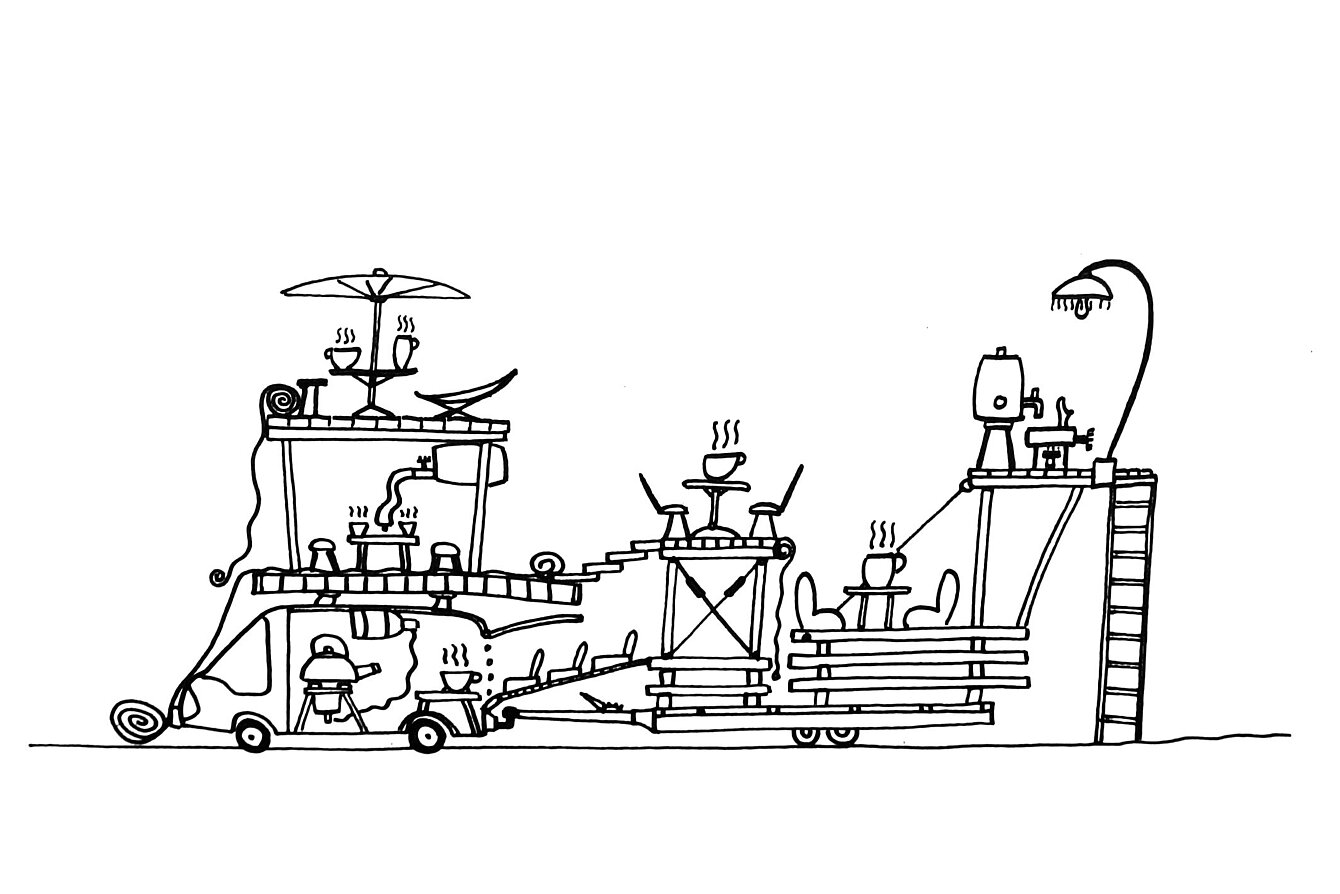
This is an inspiration for Rainer Prohaska, whose temporary structures made of wooden beams, ratchet straps and concrete formwork beams become meeting places and centres of social interaction in public spaces. As part of his participation in this year's steirischer herbst, Rainer Prohaska invites visitors to join him in building a Mobile Tea House in Leutschach and Leibnitz. Here, tea will be the starting point for dialogue and exchange, performances, lectures and chats. By involving different population groups and refugees, the planned Mobile Tea House aims to bridge cultural divides through the medium of tea.
Rainer Prohaska's characteristic Toy-Kit Architecture, a modular construction system at the interface between sculpture and installation, forms the formal framework for a flexible, positive approach to cultural processes of change. In the context of the Mobile Tea House in particular, Toy-Kit Architecture simplifies the construction task to fundamental elements, creating a universally understandable spatial vocabulary. Similarly, the gesture of preparing and consuming tea together is universally understandable. The joint construction process itself requires coordination, cooperation and interaction, which can then be deepened over a cup of tea and contributions from invited guest artists.
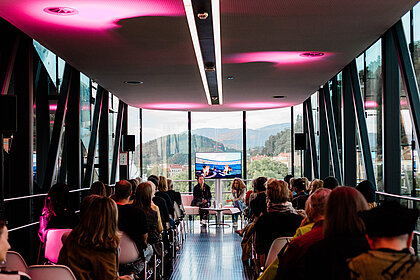
At steirischer herbst, Rainer Prohaska invites the residents of Leibnitz and Leutschach to participate in the joint construction process, tea ceremonies from different cultures and a varied supporting programme with literary, scientific and theoretical contributions from invited artists.
WITH:
Julia Gaisbacher (project management, artist, photography), Sabeth Tödtli (urban researcher), Alexander Peer (writer), Florian Fender (architect), Reverend Fukaaze (Dao-Dadaist) and various guests from local institutions.