









Roman Empire, 75–100 AD


Dating
Roman Empire, 75–100 AD
Dimensions
Hight: 7,5 cm
Max. diameter: 10 cm
Material
Silver, partially gold-plated
Place of discovery
Roman villa in Grünau (Groß St. Florian)
Show all
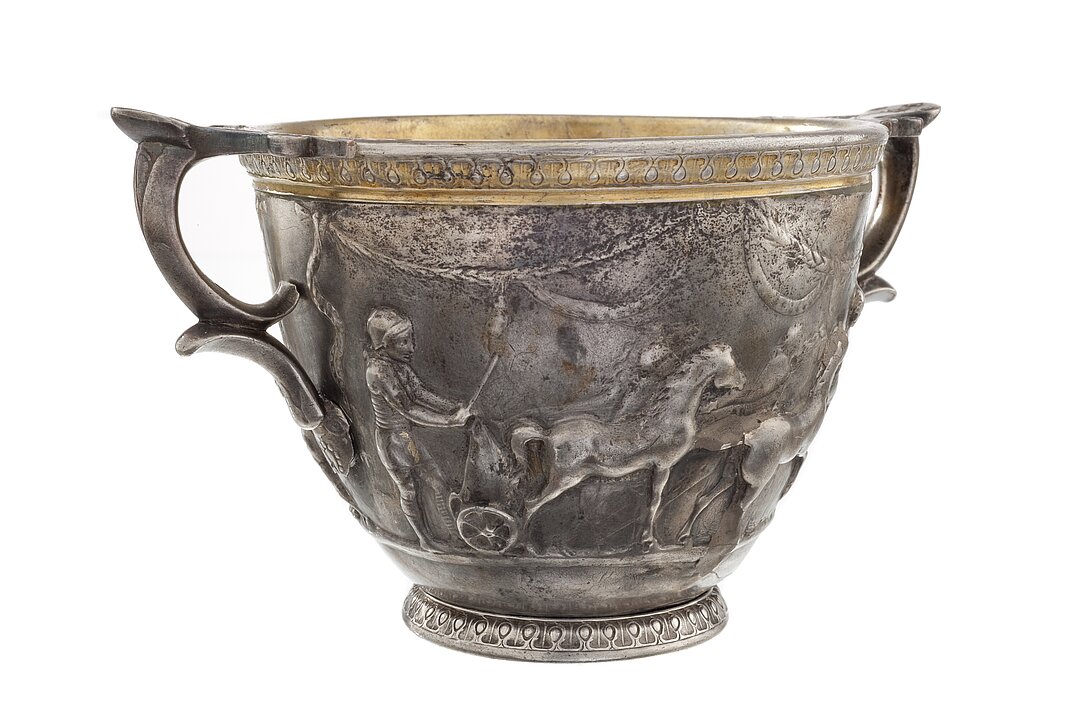
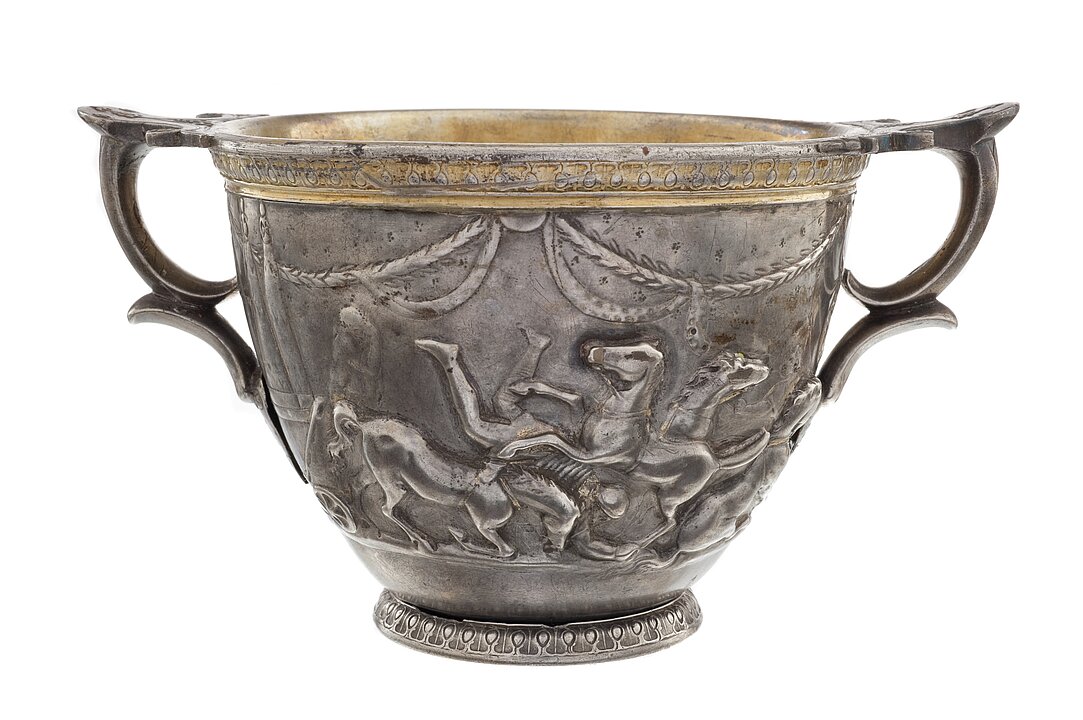
Preparations for a chariot race are depicted on one side while the other side portrays a spectacular accident at the same event. The tight bends on the circus racecourse were particularly dangerous. Three cones, the so–called turning marks, indicate the bend at which the accident occurs.
Based on stylistic comparisons, the goblet has been dated back to the reign of Emperor Claudius (41–54 AD), although the first phase of the villa only seems to fall in the period from 70 to 100 AD. From Groß St. Florian we are aware of a Roman stone relief, which depicted a duumvir (mayor). He may have been the owner of the villa. In any case, the goblet is an import from Central Italy. Hence, it is possible on the one hand that a Celtic chieftain owned the goblet and also had the villa built. However, it might also be possible that a migrant Roman or Italian brought the goblet with him from his homeland.
Presumably, the goblet was buried to secure it against theft. In our latitudes, the burial of valuables in times of war or crisis has also been a standard occurrence right up to the recent present. Although the archaeological evidence does not provide us with exact details of the burial time, we do know that the villa in Grünau was not fully operational in the third century AD. Hence it might be the case that the goblet was buried around 180 AD due to the Marcomannic Wars. In any case, the owner was no longer able to retrieve the goblet after the danger had receded.