



Hallstatt period, end of 7th century BC


Dating
Hallstatt period, end of 7th century BC
Dimensions
Length 42 cm, width 32,5 cm, hight 33 cm
Material
Bronze
Place of discovery
Strettweg near Judenburg
Show all
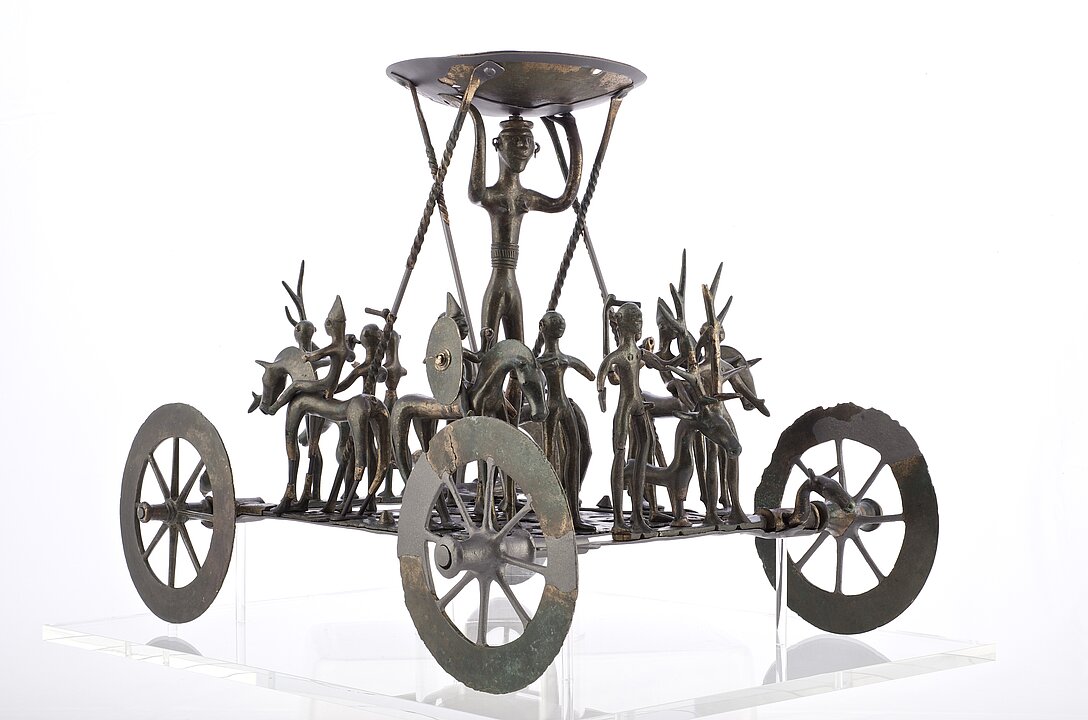
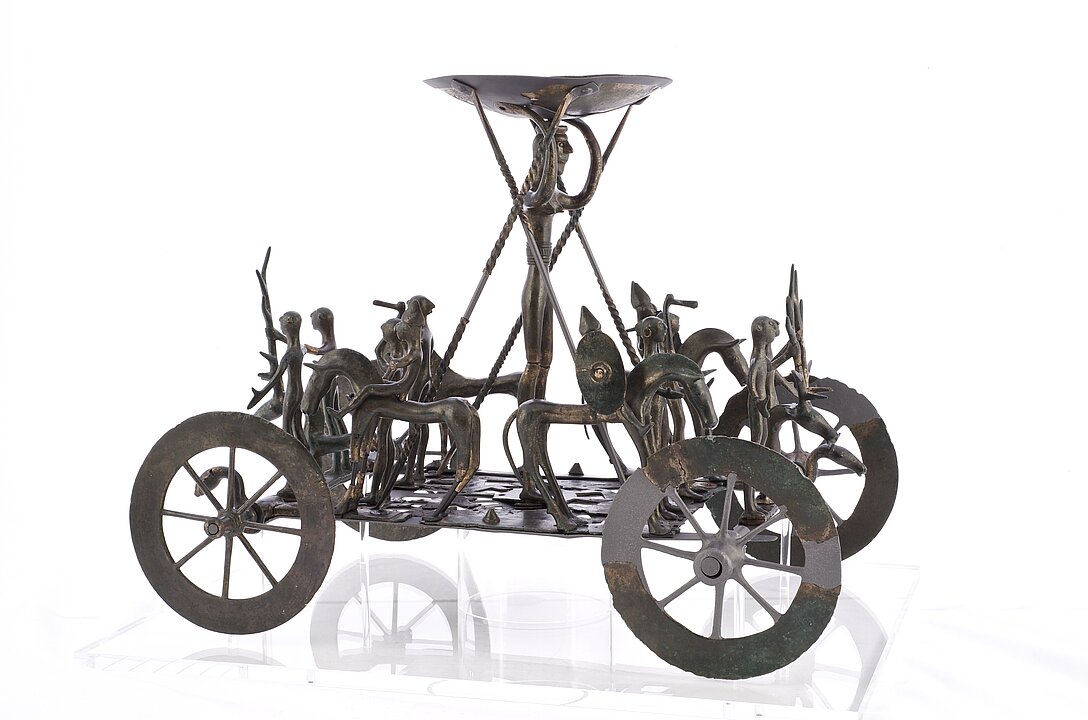
In 1851, while out in his field north of Strettweg, the farmer Ferdinand Pfeffer came across a massive accumulation of stones that represented the remains of the burial chamber of a burial mound that had been built for a chieftain in the Hallstatt period. Among the stones were a large number of fragmented bronze and iron objects. They were burial objects in the form of weapons, jewellery, banquet utensils and drinking vessels, as well as fragments of a wagon with a cauldron, which was presented to the Universalmuseum Joanneum in 1853 and became one of Austria’s most famous prehistoric finds under the name Cult Wagon of Strettweg.
The bottom of the wagon consists of a square–shaped, open–worked base plate with four spoked wheels. A female figure, approx. 32 cm high and holding a flat bowl–shaped object in her upraised hands, stands in the centre of the wagon. Presumably, the actual cauldron attachment once sat on top of the flat bowl. Next to the cauldron bearer stand men, women, mounted warriors and people leading a deer by its antlers.
The scene depicted here is interpreted as a sacrificial procession, whereby the wagon was always associated with ritual acts and may have served for the consumption of a libation or the burning of incense. The unusually ornate, figurative accoutrements of the Strettweg Wagon make it stand out from the mass of the rather plain cauldron wagons of the Urnfield and Hallstatt cultures. It is the most precious object in the collections of the Universalmuseum Joanneum.