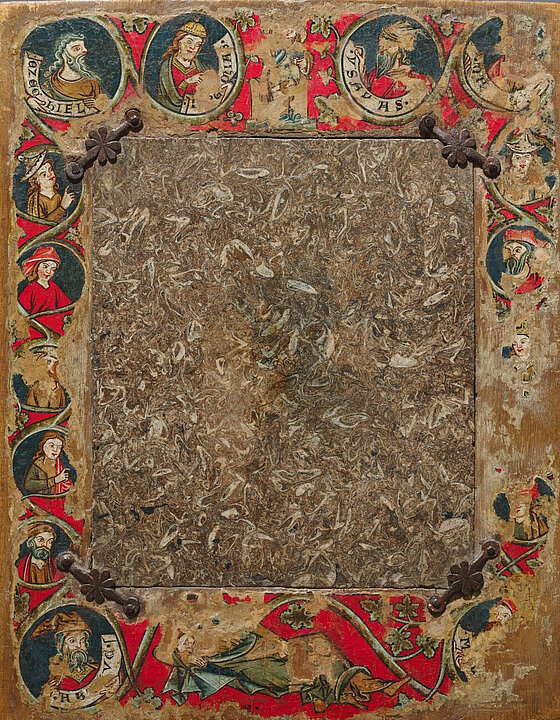
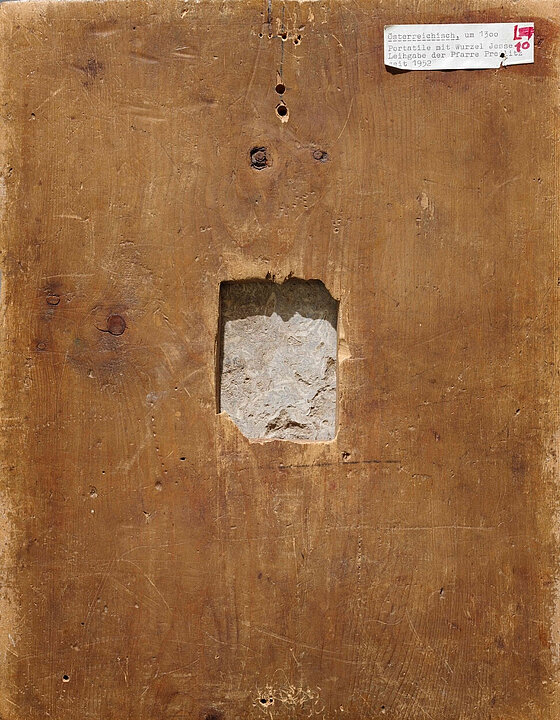
This object in question is a portable altar (altare mobile, altare portatile). The back of the stone slab has an opening in which a relic was originally embedded. This is no longer present today.
Portable or travel altars were used primarily in the Middle Ages wherever there was no fixed altar (altare fixum). It is attested from an early period that the altar had to be consecrated by a bishop. This included the presence of a relic as well as the provision of a stone slab – referring to the stone mensa (the tabletop of an altar) required since the ninth century.
The painting on the wooden frame is difficult to make out in places. At the bottom edge is a figure from which two tendrils with foliage spring forth. This is a typical depiction of the Prophet Jesse as the starting point of the genealogical tree, extending through prophets and saints to Jesus Christ. The tendrils wind their way upwards along the sides, encircling several medallions with bust portraits, and culminate in a depiction of the Virgin Mary enthroned with the Child. Thanks to the inscriptions, some of the prophets can be identified: at the lower left is the medallion of Habakkuk; the upper row, from left to right, features the four ‘major prophets’ Ezekiel, Jeremiah, Isaiah and, presumably, Daniel. The smaller medallions on the sides may be depictions of saints. All the faces are turned toward the centre of the panel, that is, toward the chalice and paten when these were placed on the stone during Mass, or toward the embedded relic.
Portable altar depicting the Tree of Jesse
Styria, c.1280
Tempera on softwood, Fohnsdorf shell limestone
Provenance: On loan from the parish of Predlitz near Murau since 1952
Inv. L 10