






Helper of Christians and Queen of Heaven

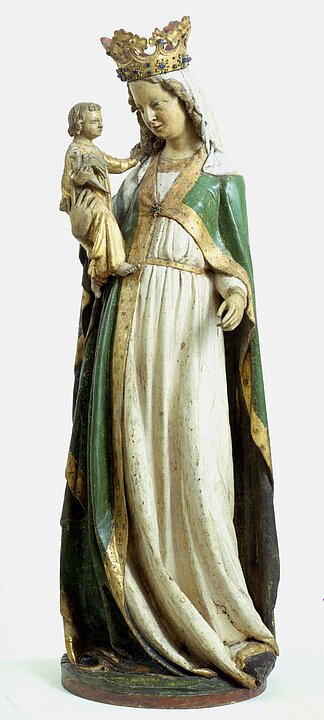
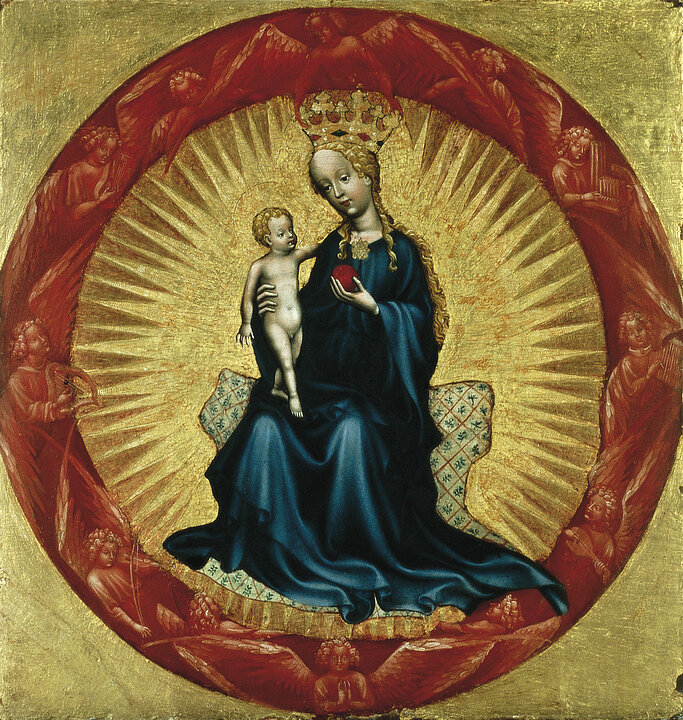
Mary, the mother of Christ, is regarded as the most important saint. The early church already started to worship her as Mother of God and for preparing the way for Christ. As the helper of Christians she enjoys great admiration. People turned to her for protection from the multiple perils of their time such as epidemics, famine and war against which they were defenceless. The worship of the Mother of God knew no social rank. Whether clergy, knights or burghers, all found comfort in Mary's sheltering mantle.

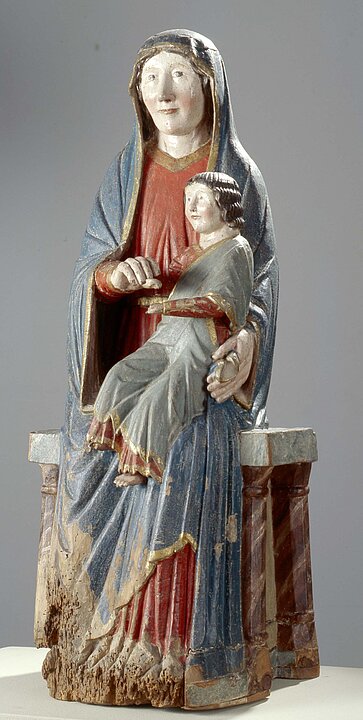
The Gothic style that disseminated all over Europe originally started in France. It was from here, too, that the culture of courtly minnesang created a new concept of women. It evoked the ideal of grace and beauty, which are symbols of both purity and completion. The cult of the Virgin Mary was deeply influenced by this. As the Queen of Heaven, the Mother of God was transformed into a noble lady - Notre Dame. Unlike hardly any other carving, the Admont Madonna exemplifies this ideal. Earthly beauty and celestial regality come together in perfect harmony.
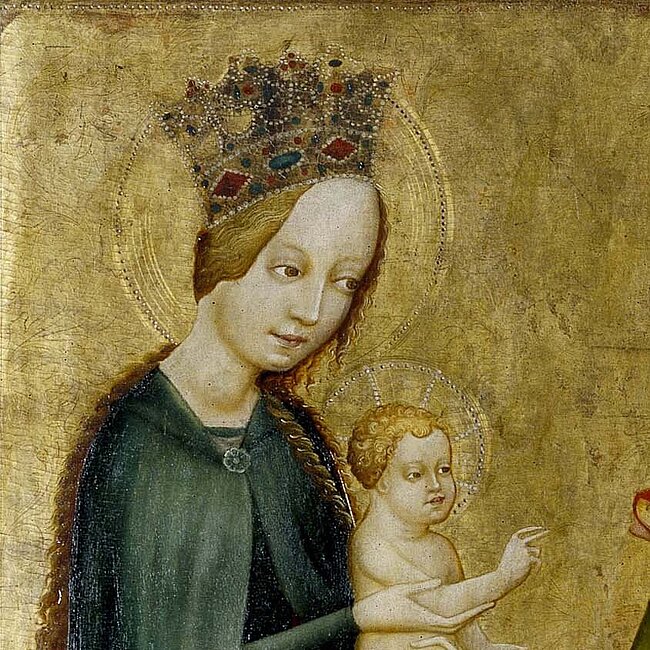
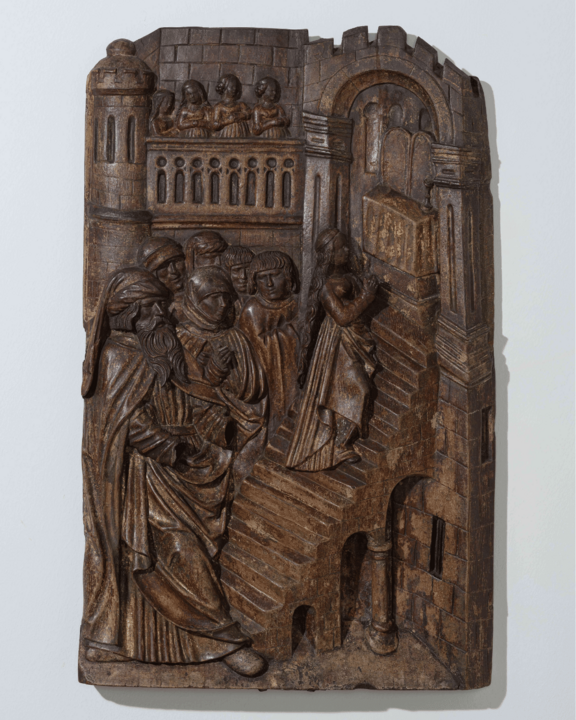
Image Credits

The Presentation of Mary at the Temple

The Gospel of James, chapters 1–4, serves as the textual source for the Presentation of Mary:

Having unexpectedly become pregnant, Anna promised to dedicate the child to God. Thus, Anne and Joachim brought the three-year-old Mary to the Temple in Jerusalem.

The limewood relief shows Mary ascending a long staircase in prayer. She no longer looks back at her parents Anna and Joachim. They stand at the foot of the stairs, accompanied by other witnesses. The scene depicts both a moment of separation and a moment of new beginnings. Mary is walking toward a raised altar that symbolizes the temple. Her upbringing there means being isolated from the outside world – from evil and sin. This emphasizes Mary’s purity and holiness. The temple virgins are already waiting for her behind a balustrade. Together with them, she will sew a temple curtain.

In the Eastern Church, the Presentation of Mary has been one of the Marian feast days since the sixth century and therefore appears in early iconographic cycles. The popes of the Western Church initially rejected the feast. It was not until the fourteenth century that the theme gradually gained acceptance, coinciding with the height of Marian devotion.


The Presentation of Mary at the Temple
Southern Germany, c.1520
Limewood
Provenance: Purchased from Karl Mayer, Graz, before 1923
Inv. P 119

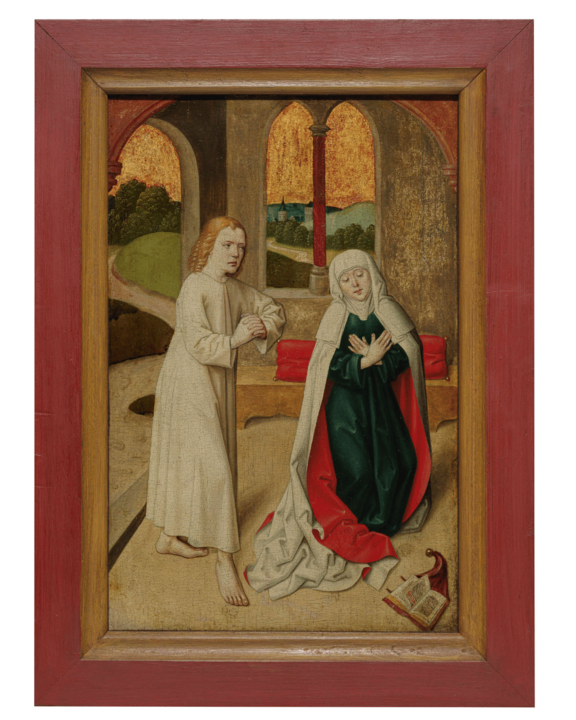
The Annunciation of the Virgin’s Death

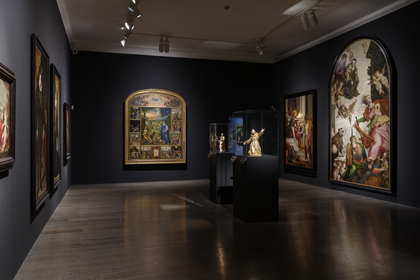
The relatively small wooden panel shows a very rare depiction. The gold background indicates that this is a divine scene. Mary gazes humbly at the ground. Her eyes are cast down, and her hands crossed hands on her chest. A girdle book lies on the floor before her. She appears to have been reading it and dropped it. As in the Annunciation, she is here receiving a higher message – the calling home to God. Since the crucifixion of her son Jesus, she herself had strongly desired death. She longed for her son and knew that in death she would be reunited with him. In the Legenda Aurea (Golden Legend), a medieval collection of the legendary lives of saints, the author Jacobus de Voragine (1228/29–1298) describes Mary’s great sorrow and longing for death.

There are several versions of the figure who approaches Mary to deliver the news of her impending death. According to Coptic tradition, it was Christ himself who came to his mother. Other depictions clearly show an angel, often holding a palm branch, or the Apostle John, who is the first to come to Mary and speaks with her alone. Upon Mary’s death, the twelve apostles will gather once more.


The Annunciation of the Virgin’s Death
Cologne, c.1460/70
Tempera on oak wood
Provenance: Bequest of Prof. Luschin-Ebengreuth, 1932
Inv. 808

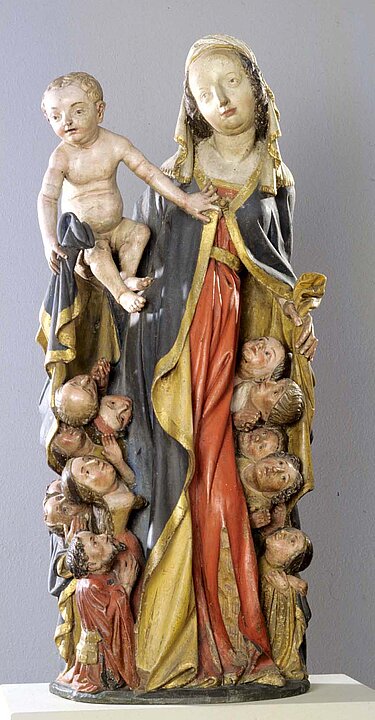
Virgin of Mercy

Virgin of Mercy
Wood
Frauenberg bei Admont/Upper Styria, c. 1430
Inv. P 40

Previous room