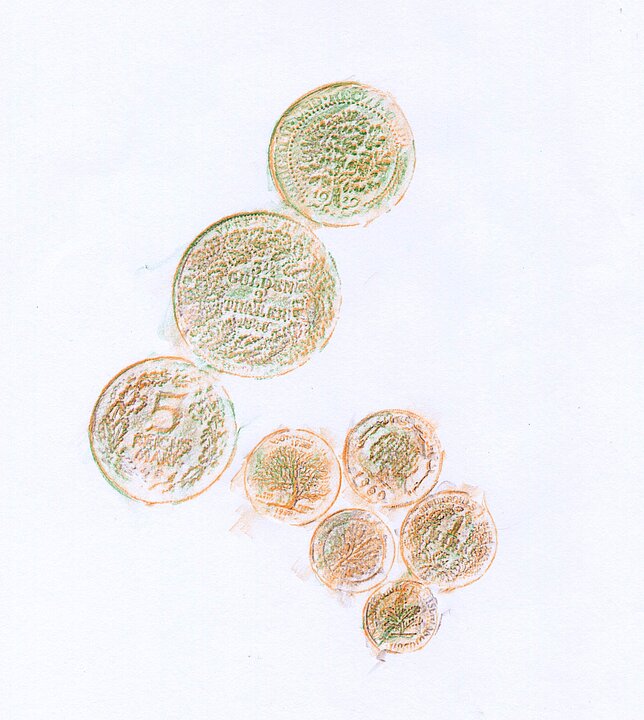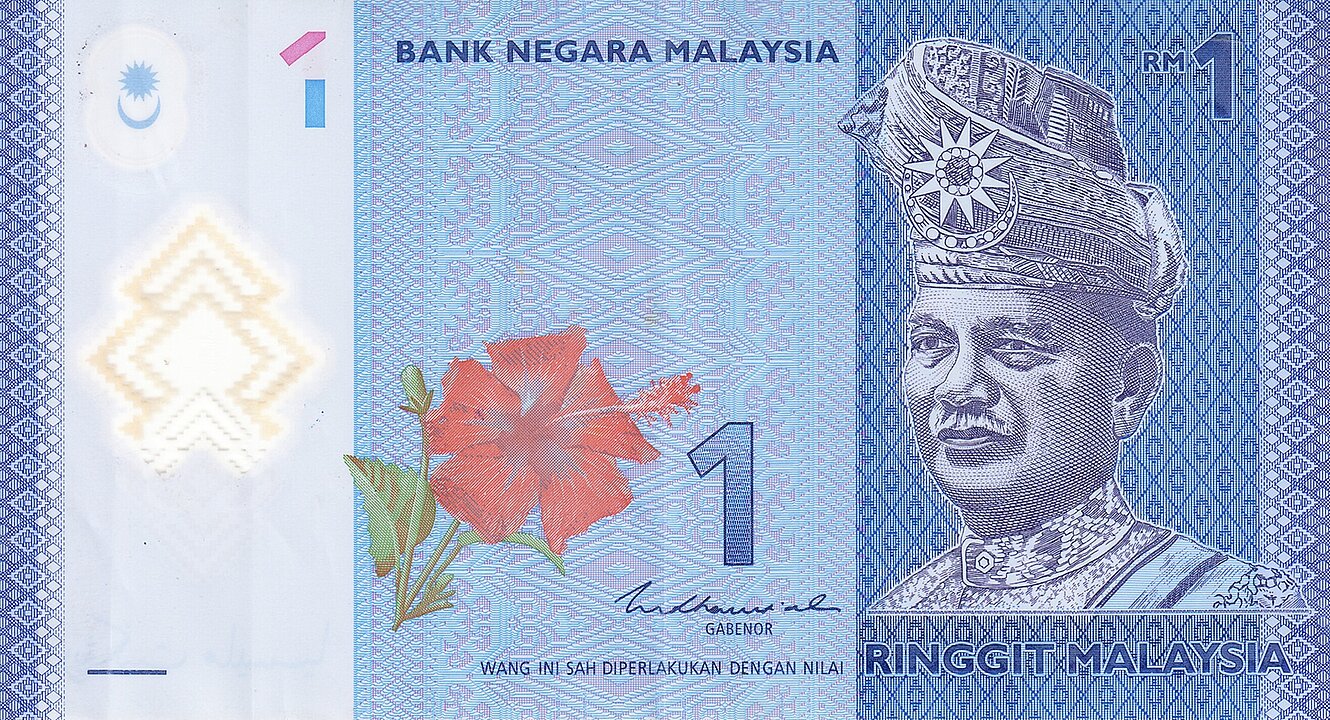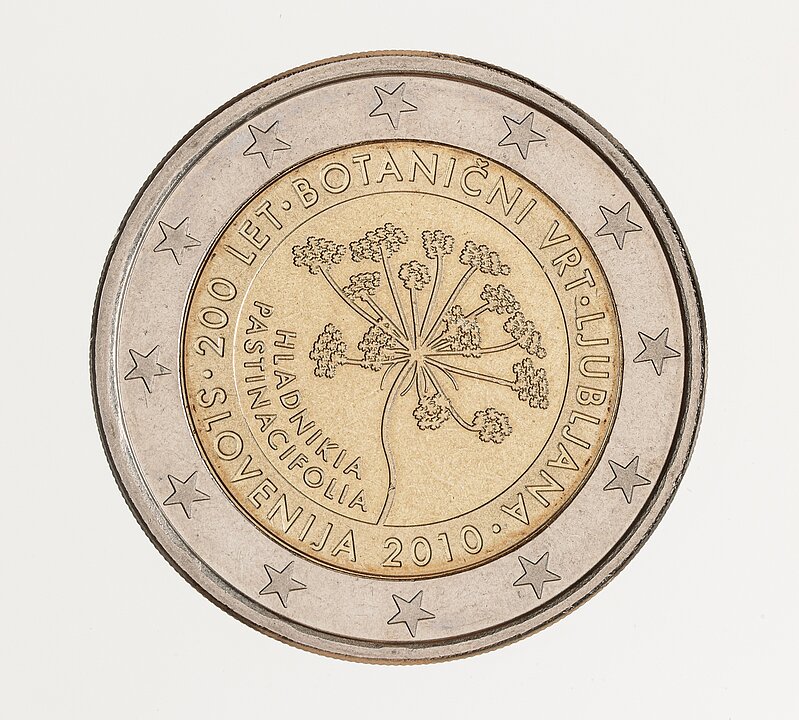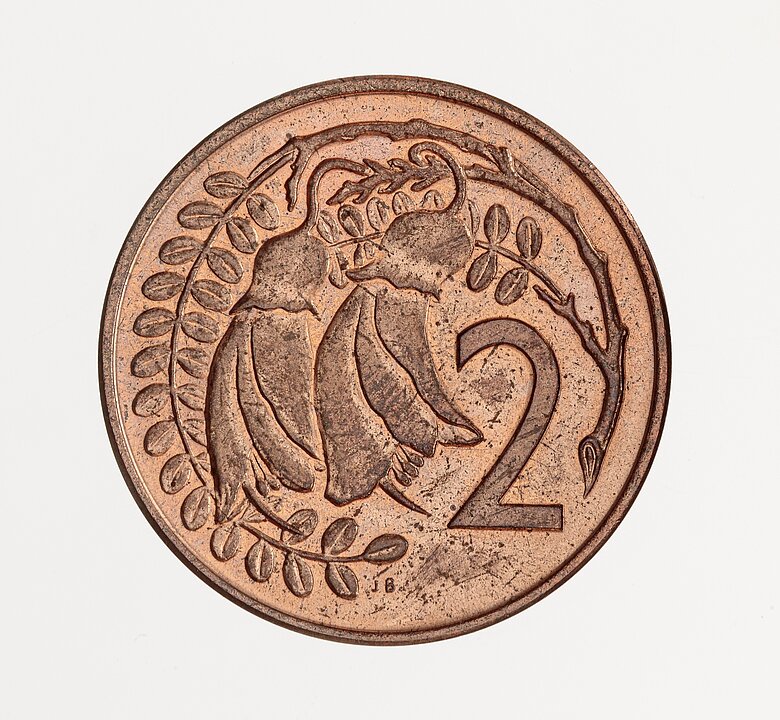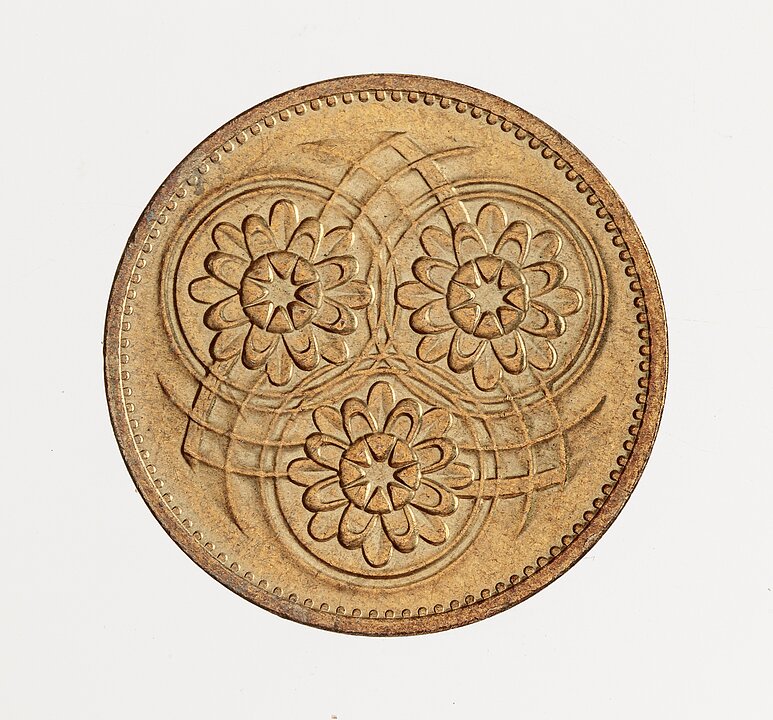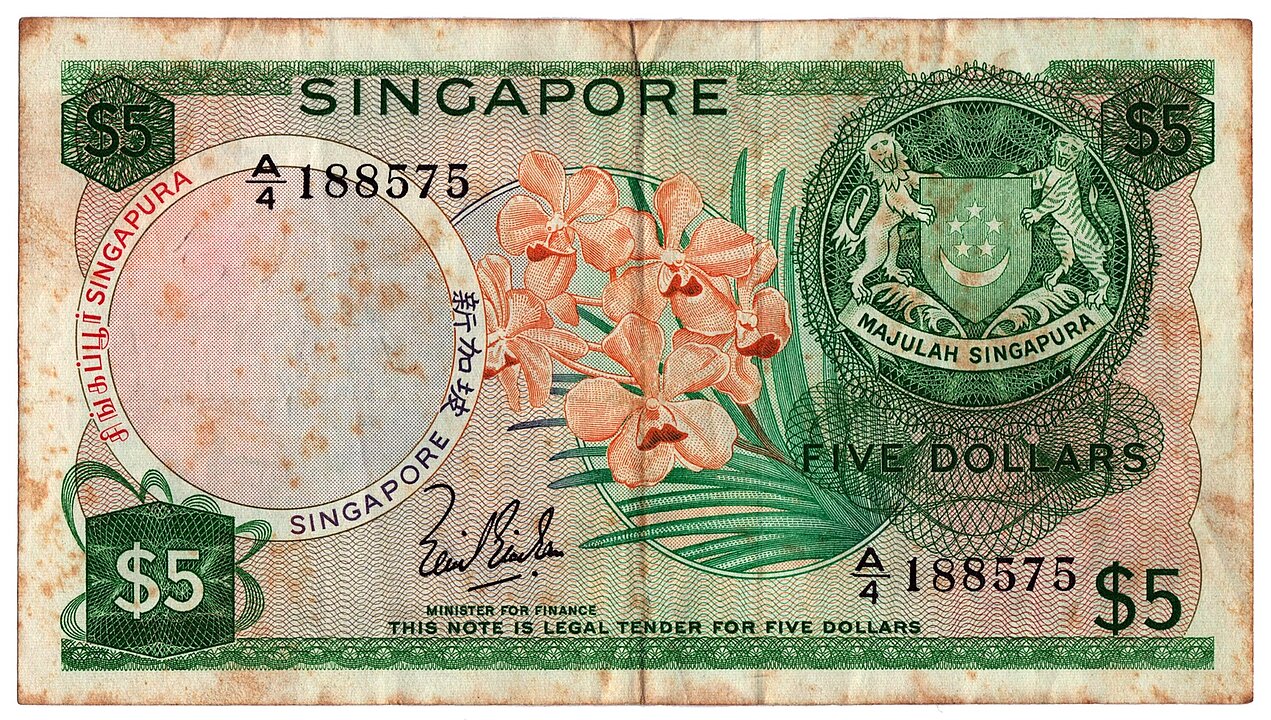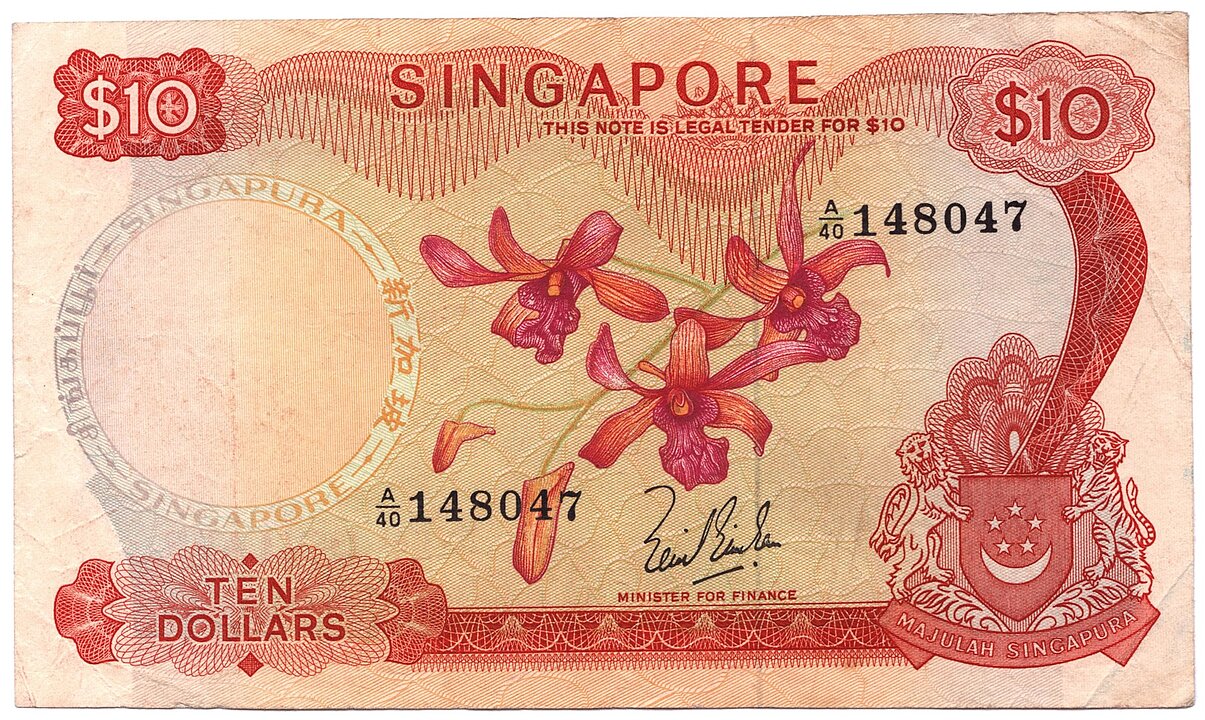
















A representative example of an official national flower that is specifically used as a state symbol and adorns both coins and banknotes is Malaysia's Bunga Raya (Hibiscus rosa-sinensis), whose five petals symbolise the five national principles of the Southeast Asian state: belief in God, loyalty to the king and country, primacy of the constitution, rule of law and moral behaviour. In Japan, the chrysanthemum is not only the national flower, but also the symbol of the imperial family, representing longevity and happiness, and has thus found its way into the coinage of historic Japan. A national symbol of Germany that is deeply rooted in the truest sense of the word is the oak tree – no wonder that its branches adorn not only Germany's current 1, 2 and 5 cent coins, but also the former deutschmark.
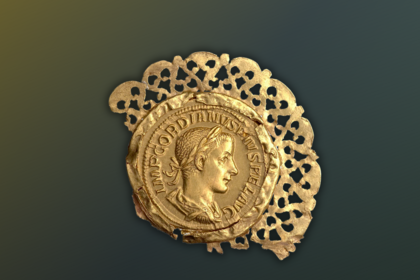
Starting from a selection of coins from the Coin Collection of the Universalmuseum Joanneum, the artist Ryts Monet isolated and reorganized certain coins, grouping them according to the types of plants or flowers depicted. In this way, even coins originating from geographically distant or historically opposing regions find an unexpected harmony, restoring a natural order within a human-made order. The title of the series refers to the technique employed: frottage, a simple method used in both artistic and archaeological contexts.