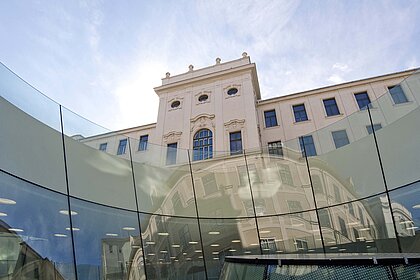
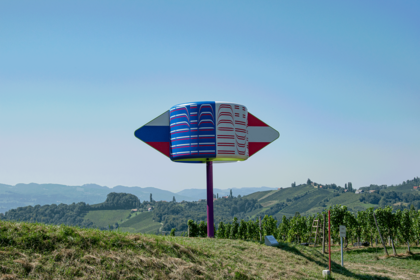
Nature sites complement the exhibition in the House of Biodiversity. They direct the focus to selected aspects within the comprehensive exhibition theme. At the same time, they invite visitors to Tierwelt Herberstein to visit the House of Biodiversity.
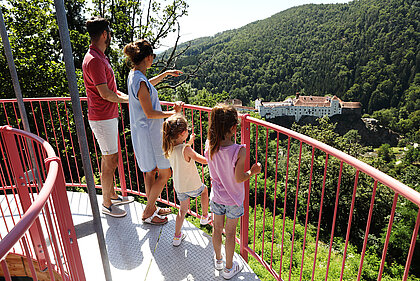
Integrated into the landscape, the stations highlight habitat diversity, natural networks and the Feistritzklamm‘s natural landscape. A platform high above the Feistritzklamm offers fascinating views of a species-rich and beautiful Styrian landscape.
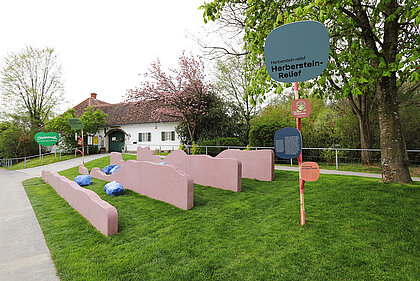
Herberstein Relief
In front of the main entrance to Tierwelt Herberstein, an abstract, three-dimensional and accessible relief of the Feistritzklamm arouses curiosity about the House of Biodiversity. Its location and those of the outstations as well as prominent places such as the castle can be found here. This orientation aid reveals the varied structuring of the area, which is divided by the Feistritz River. The accessible relief in front of the entrance to the Animal World locates the House of Biodiversity and the natural sites along the Path of Diversity and emphasizes the scenic appeal of the area.
Network of the forest
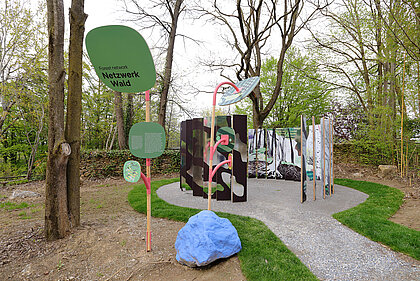
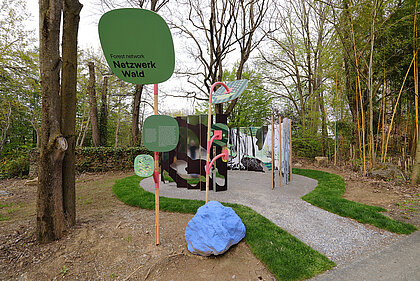
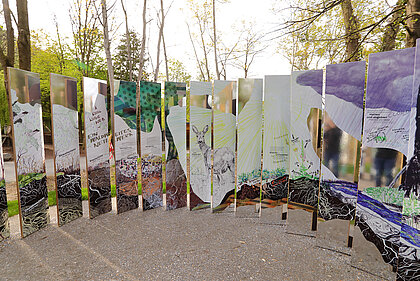
Here, the complexity of a biological network draws visitors into its midst. A ring-shaped installation of 33 wooden steles serves as an information carrier. On its inside, it shows a 360-degree hidden object picture that visualizes biological connections and interdependencies within a forest ecosystem in the form of a colorful collage. Inspired by the World Wide Web, a "Wood Wide Web" is described with fun facts. For example, mycorrhizal fungi act as "providers" of sugar to the nutrient cycle - via an inscrutable "darknet". Insects communicate wirelessly with their host plants by means of scents, virtually via "W-Lan". As "system administrator", the top regulator wolf ensures a healthy development of the relationship structure.
Habitat arena
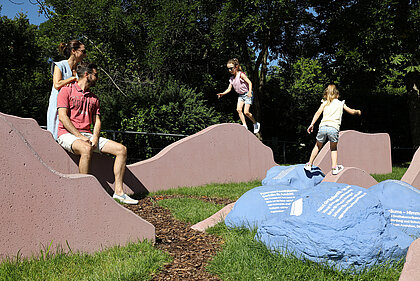
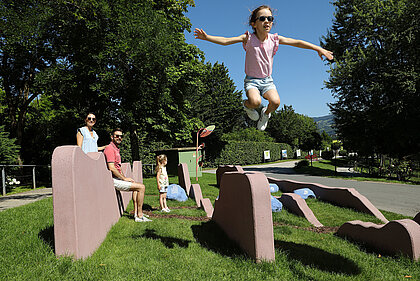
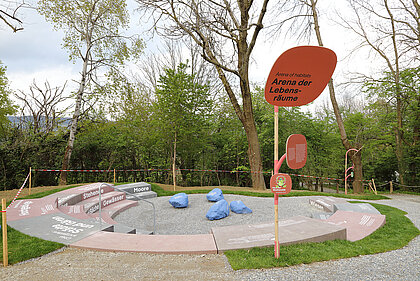
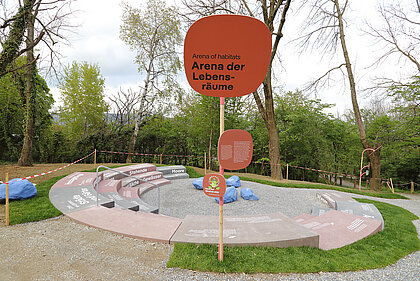
The Arena of Habitats invites visitors to learn more about the most important native large-scale habitats and their significance. The seating areas of the multi-level arena, which is divided into sectors, convey striking facts about functions, threats and protection strategies. The arena invites vistitors to discuss and negotiatedifferent perspectives and positions.
In its shaded location, the arena also serves as a place of relaxation for visitors and can be used playfully by groups. For example, players can take part in an ecosystem quiz to answer the question posed in the right sector.
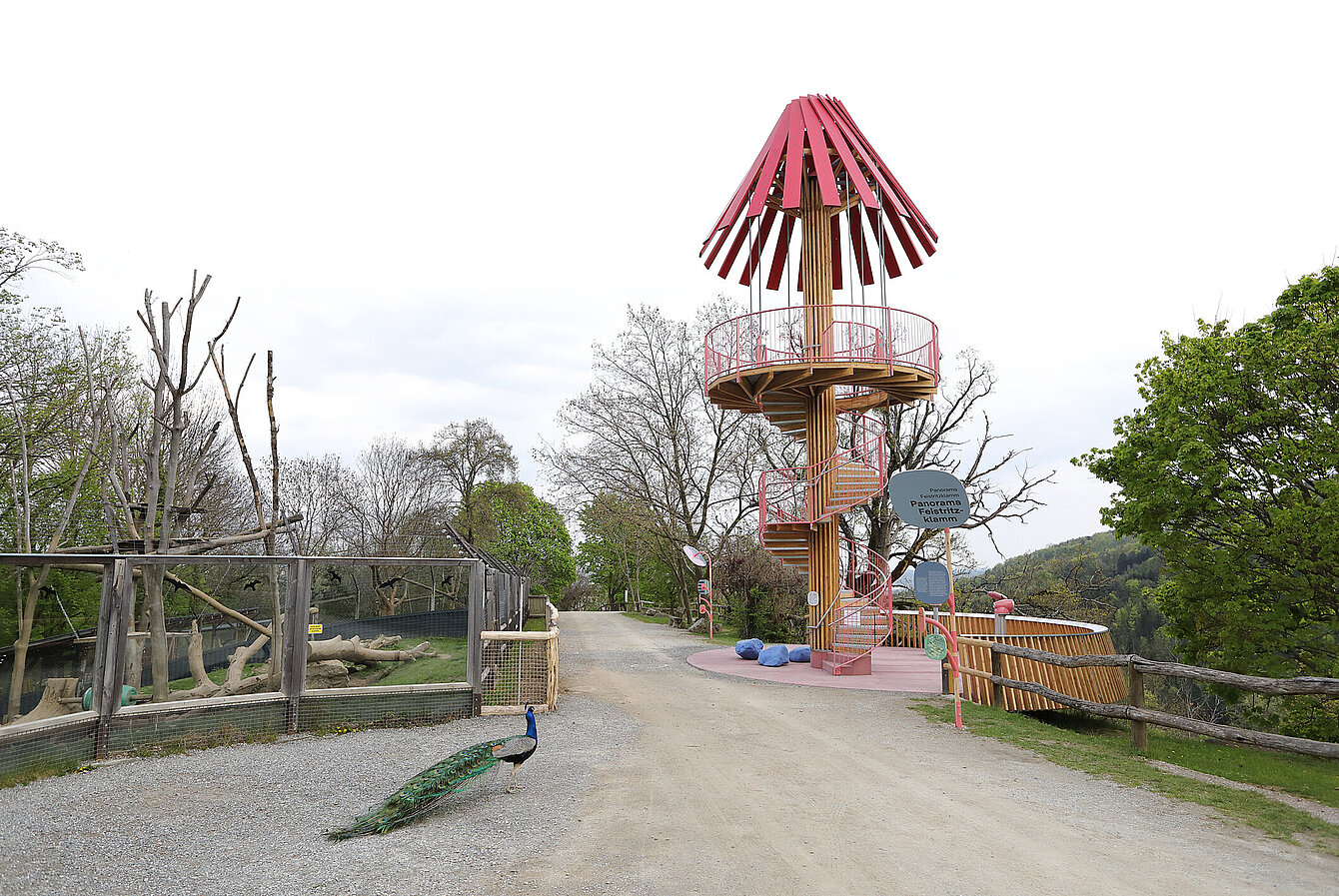
Panorama Feistritzklamm
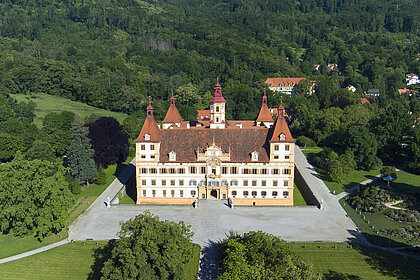
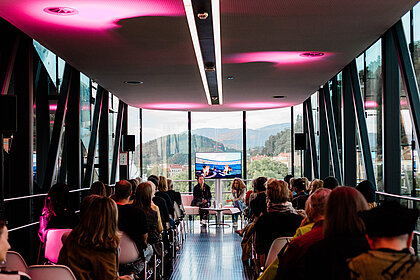
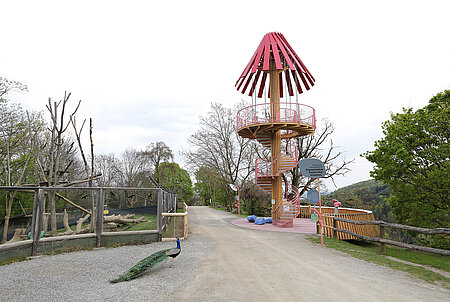
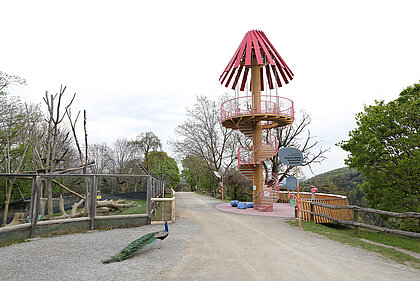
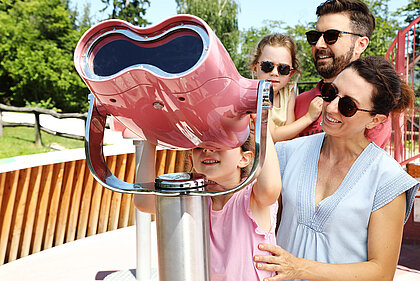
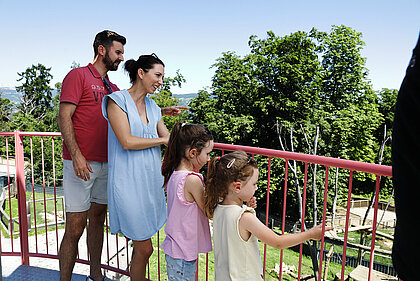
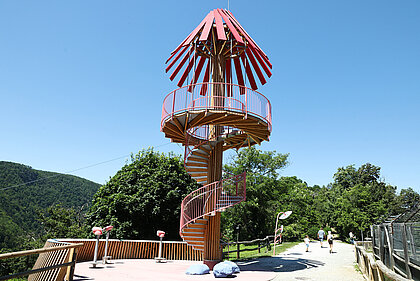
On a ridge at one of the highest points in the grounds of Tierwelt Herberstein, a viewing terrace and a tower about six meters high are being built. The "Panorama Feistritzklamm" throws new light on the natural and cultural landscape of Herberstein. Fenced off for centuries as a fallow deer enclosure, a hotspot of Styrian biodiversity was created here. Valuable structures of the European protected area Feistritzklamm/Herberstein become visible to visitors for the first time with a look through adventure binoculars. Habitats that are essential for the survival of endangered species such as the lesser horseshoe bat or the oak longhorn beetle can be viewed from above. A view opens up of primeval forest-like old oaks, gorge and slope mixed forests as well as rocky dry grasslands of the Feistritzklamm. However, some of the vegetation that grows here after the enclosure has been abandoned impairs biodiversity. The grazing of goats is intended to reduce the growth of black locust trees in the future and thus make an important contribution to nature conservation.
Research mobile
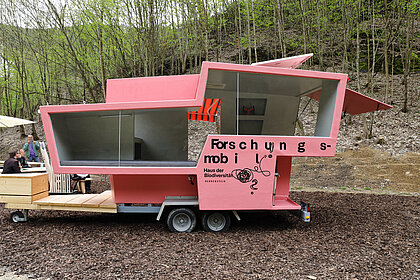
Embedded in a fantastic natural scenery at the foot of the Herberstein castle rock, between the free-flowing Feistritz river and the adjacent near-natural forests, a mobile research and observation station is operated. It houses various simple devices for studying and observing biodiversity. School classes as well as other groups and individuals will be supervised here in the form of workshops. The site also serves as a contact point and starting point for excursions and nature walks in the immediate vicinity. Citizen science, i.e. nature observation by laypersons, is emphasized, with data obtained in the area being presented and processed in the House of Biodiversity. In the winter months, the mobile research station will go on tour for days at a time and offer a program on regional biodiversity in cities in eastern Styria.