

Project management: Wolfgang Paill (Natural History Museum)
Project coordination: Patricia Wess (Natural History Museum)


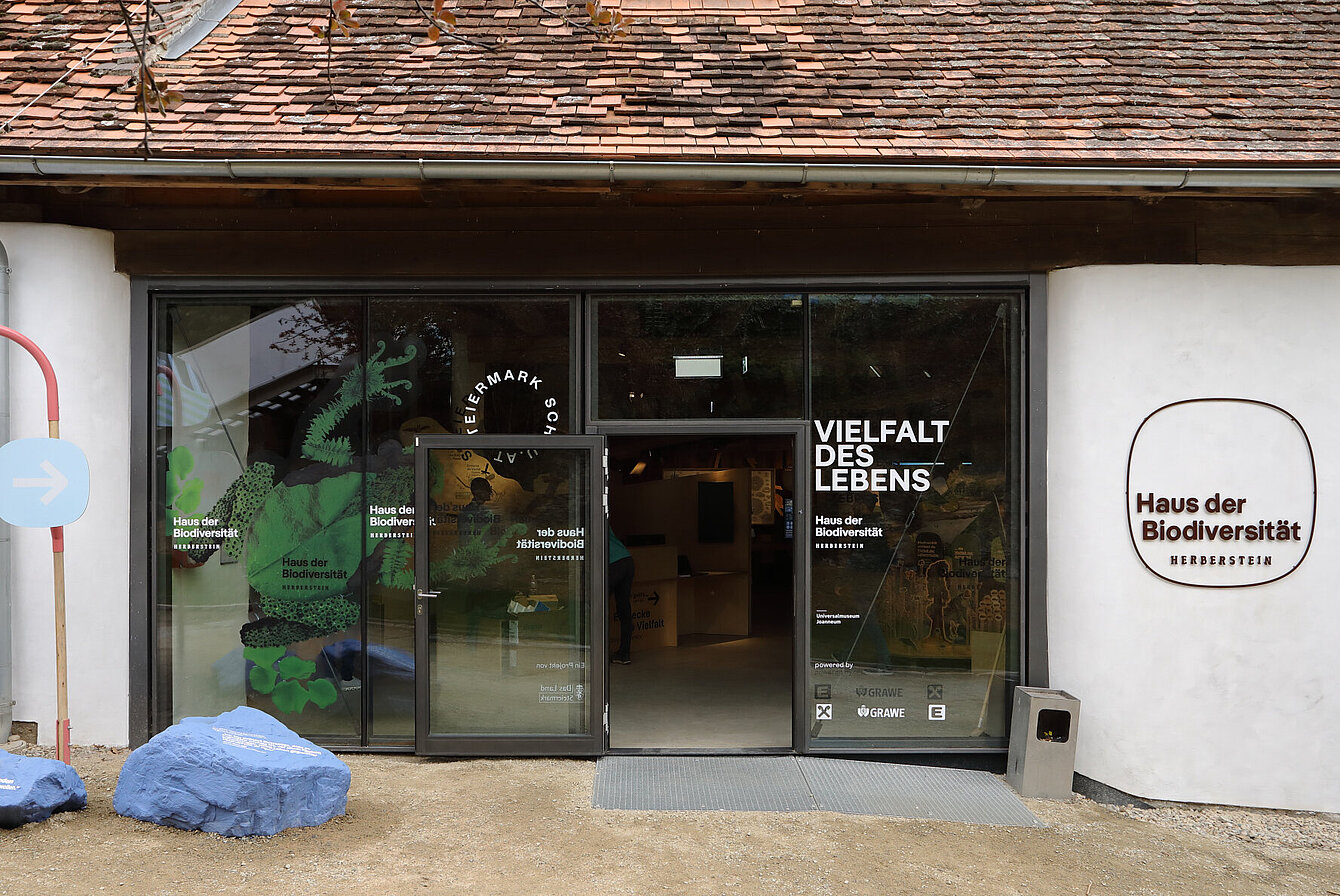
Image Credits
Location
SHOWING STYRIA, Tierwelt Herberstein
Show all
Project
Project management: Wolfgang Paill (Natural History Museum)
Project coordination: Patricia Wess (Natural History Museum)
Curator House of Biodiversity inkl. natural sites
Sandra Aurenhammer (Ökoteam), Thomas Frieß (Ökoteam); Michael C. Niki Knopp (Natural History Museum), Wolfgang Paill (Natural History Museum)
Curatorial assistant House of Biodiversity inkl. natural sites
Natalia Frühmann (Natural History Museum)
Exhibition design
Architecture, Design and Graphics
House of Biodiversity inkl. natural sites: Benedikt Haid, Heidi Pretterhofer, Michael Rieper
Show all
Under the title "Diversity of Life", SHOWING STYRIA 2023 dealed with the fascination, the importance and the threat of biodiversity in nature in a new House of Biodiversity and with natural sites in the Herberstein Animal World as well as in the adjacent Feistritzklamm nature reserve. Thus a very important topic was taken up: the meaning and thus the necessity of the preservation of the diversity of species at the example of Styria.
The new House of Biodiversity at Herberstein Animal World invites visitors to marvel at and discover the wonders and numerous achievements of nature as well as its diversity. How does biodiversity come into being? Why is it so important for our existence and what can each individual contribute to the protection of existing ecosystems?
This is communicated in the House of Biodiversity and in the natural sites along the path of diversity in a playful, interactive, exciting and sometimes surprising way.
The House of Biodiversity will also be in operation far beyond the exhibition SHOWING STYRIA. A permanent observation of the local biodiversity with the help of scientific methods (biodiversity monitoring) is planned.
A stylized oak tree lies across the 400-year-old threshing floor. Five areas are presented along the root zone, trunk and crown. On the one hand, the oak serves as exhibition display, furniture and room divider. On the other hand, it reminds us of the importance of - old - oaks in the ecosystem of the Feistritzklamm: as living, mighty tree giants, as dying trees or also as - mostly lying - deadwood. In each stage, the oak provides habitat for many organisms.
The House of Biodiversity was reopened as part of STEIERMARK SCHAU 2023 and can still be experienced by visitors. You find information about your visit on the Herberstein Animal World website.
The tour begins with the theme 'Discover Diversity'. In addition to large-format search images of the two extremely species-rich habitats of tropical forests and coral reefs, an aquarium and the presentation of rare species ("endemics") that only occur in Styria, an oversized model of a pseudoscorpion is representative of those groups of organisms that are usually neither known nor will ever be seen and within which new species are constantly being discovered.
What makes biodiversity 'naturally precious' is indicated by objects and stations in the second area. Thanks to the interaction between different species, ecosystems can be stable and productive - for example, the "roots" of fungi connect with those of trees and exchange nutrients and information for mutual benefit.
Well-functioning ecosystems also play a major role for humans: the services provided by species and habitats range from nutrient-rich soils suitable for food production, to fresh air and pure drinking water, to substances that can be used for medicinal purposes. A scale gives an idea of the enormous monetary values these services correspond to. An often overlooked service can be experienced in a cinema: recreation by viewing "beautiful", natural Styrian landscapes.
Under the title 'You are part of the whole', the role of humans in the ecosystem is highlighted. We are only one of millions of species, but at least in the last centuries we are the species that has shaped nature the most.
For several thousand years, human agricultural activity had a positive impact on regional biodiversity. Today, we consciously choose to plant or not to plant certain species, but most importantly, we influence biodiversity in drastic ways by shaping the landscape. While some species do benefit, many lose habitat as a result. The fact that the health of an ecosystem depends on the interaction of all species is demonstrated by ourselves: Without millions of microbes colonizing our bodies, human life would not be possible.
The survival of numerous species is in our hands. A three-meter model of a bat hovering in space illustrates this with a concrete example: 'We set the course' when it comes to permanently preserving the survival conditions of the colony of the lesser horseshoe bat, which is native to the Feistritzklamm and the surrounding cultivated landscape, or promoting it through targeted measures.
Visitors are invited to form fictitious landscapes at a sand table. The more diverse the landscape, the higher the level of biodiversity. The central message is that, through our use and management, it is up to us whether we want to be surrounded by a species-poor robot lawn or a flower-rich mowing meadow.
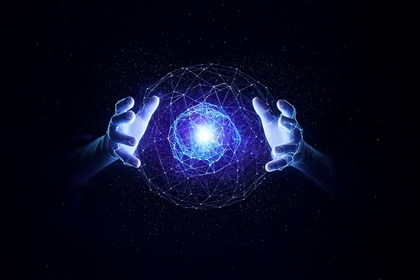
In the fifth and final area of the exhibition, an interactive globe shines out at visitors*. 'My future, my planet' are indispensably connected. How can biodiversity be protected? Who is doing something about it? What initiatives are there in Styria and what can everyone personally contribute? At a research table, you can identify species yourself and get to know the researchers and their methods who have found over 2,200 species of beetles in the Feistritzklamm gorge and have thus made their personal contribution to the protection of this unique habitat.
Glimpses
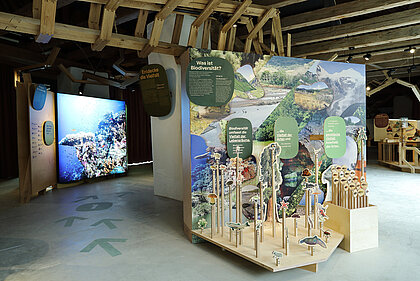
Image Credits
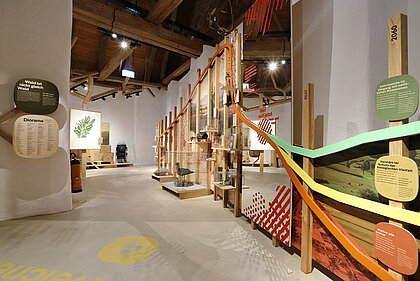
Image Credits
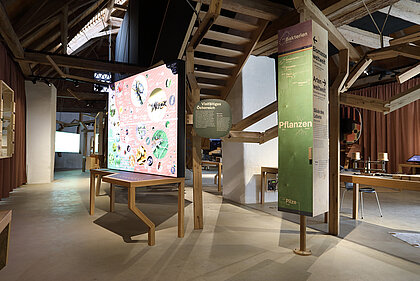
Image Credits
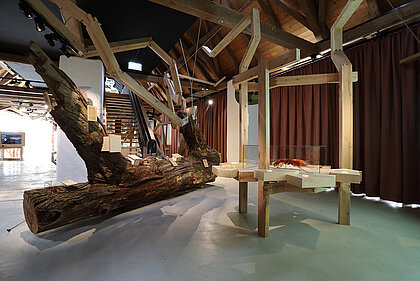
Image Credits
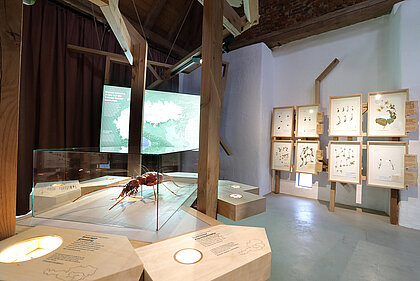
Image Credits
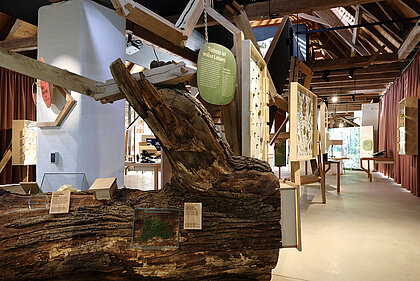
Image Credits
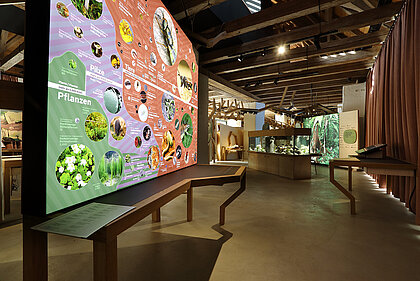
Image Credits
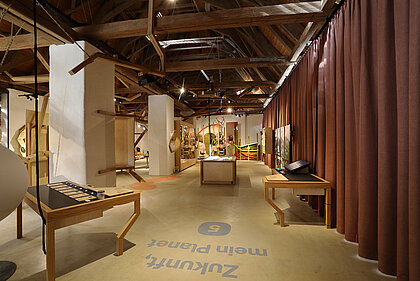
Image Credits
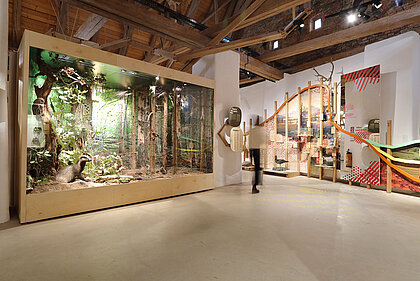
Image Credits
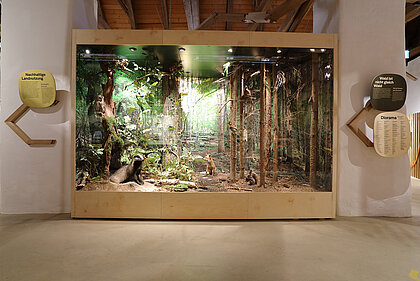
Image Credits
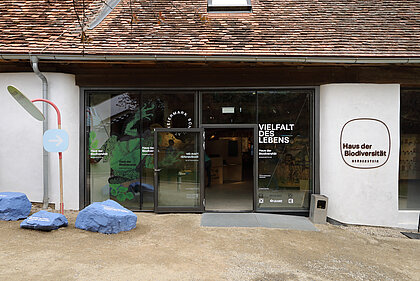
Image Credits
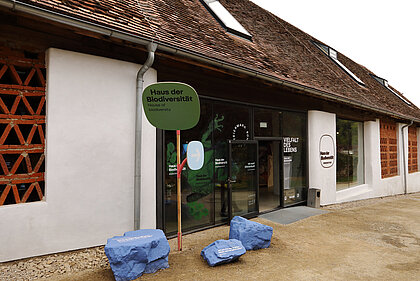
Image Credits
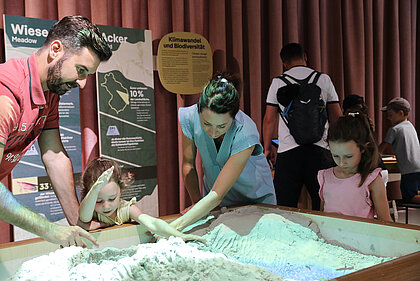
Image Credits
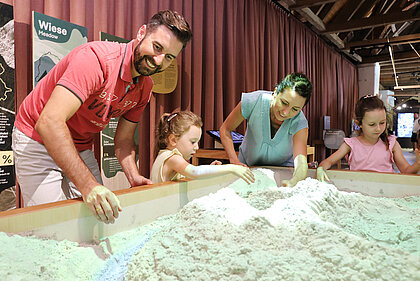
Image Credits
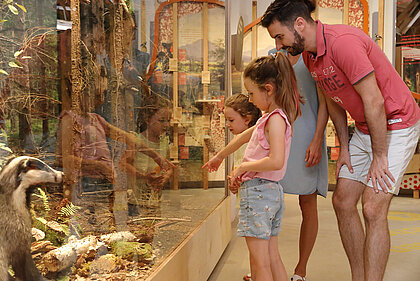
Image Credits
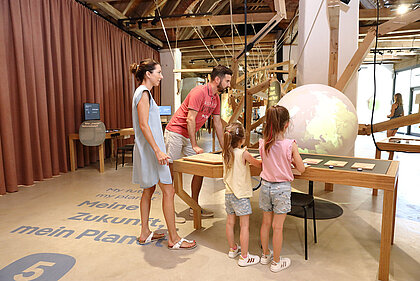
Image Credits
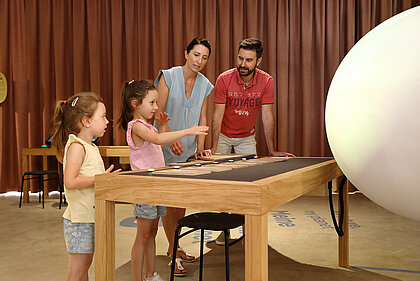
Image Credits
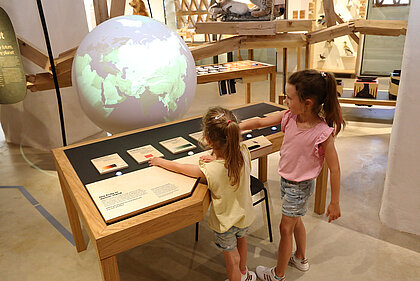
Image Credits
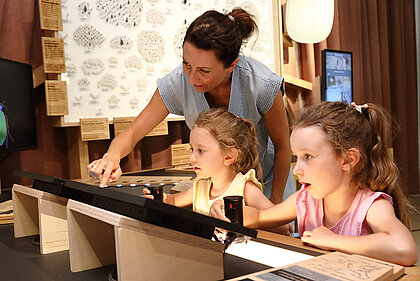
Image Credits
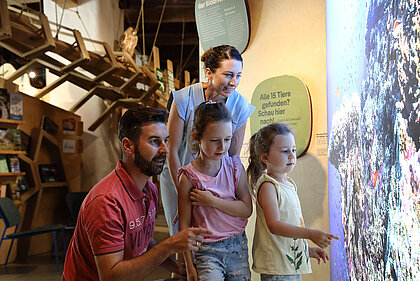
Image Credits

„Die Baubranche ist ein wesentlicher Player im Kampf gegen die Klimawende. Gerade in Zeiten großer ökologischer Herausforderungen muss dem Thema der Nachhaltigkeit eine zentrale Bedeutung zukommen. Als Baufirma mit langjähriger Erfahrung im Holzbau ist uns diese Verantwortung bewusst, und als ,Nachbar der Tierwelt Herberstein‘ sind wir stolz, den neuen Aussichtsturm mit regionalen Baustoffen errichten zu dürfen. Die Firma Kulmer, als traditionelles Familienunternehmen in der Region, freut sich, ein Partner der STEIERMARK SCHAU sein zu dürfen.“
BM Ing. Gernot Kulmer, Geschäftsführung & BM. Ing. Hannelore Feichtinger, Geschäftsführung